Showing posts with label Stealth Fighter. Show all posts

Saturday

MiG Denies Stealth Technology Transfer To China For J-20 Fighter


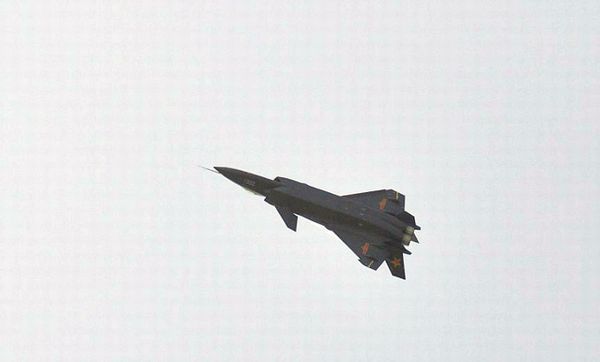
Russia has never transferred any stealth technology to China to assist it with its J-20 Black Eagle fifth-generation stealth fighter prototype, Russian plane maker MiG said.

"We are not delivering any equipment to China, and never have," MiG spokeswoman Yelena Fyodorova said.

MiG's statement follows claims in the Russian and foreign press last week that China's J-20, unveiled over six months ago, is based on technology and components from the Russian Mikoyan Article 1.44, a stealth technology demonstrator aircraft, development of which was suspended.

Some analysts say the aircraft have close similarities.


"The back end of the J-20 looks awfully like the 1.44, as does the overall layout with delta canards," said Douglas Barrie, an air warfare specialist at the London-based International Institute of Strategic Studies.

"If it's a coincidence, it's a striking one. Russia may have provided technical support, but there is nothing substantial to prove that. China has however relied on Russia for much of its defense procurement for a decade and a half," he added.

China's J-20 Black Eagle is thought to be conceptually similar to the U.S. F-22 Raptor and the Russian T-50 jets, but is likely to be just a technology demonstrator or prototype rather than a viable fighter.


China has been working on a future fighter program since the mid-1990s, but the J-20 is not expected to enter service before 2018-2020.

Earlier in the month, Mikhail Pogosyan, the head of Russia's United Aircraft Corporation said that China's fifth-generation fighter program is more for effect than substance and branded the maiden flight as a "show-off."

China relied on the Soviet Union for much of its aviation technology until the Sino-Soviet split after 1961. China then carried on developing copies of Soviet and Russian aircraft.

Beijing also relies on Russian engines, radars and electronic components for many of its other aircraft, such as the JF-17 fighter it developed jointly with Pakistan.

"We are not delivering any equipment to China, and never have," MiG spokeswoman Yelena Fyodorova said.

indrus.in

Thursday

China Develops Stealth Fighter Military Technology


China is developing new 5th generation "stealth" fighter, which is being developed under a programmed variously referred to as XXJ, J-X, or J-XX by Western intelligence sources and is apparently designated as J-14. Here, Coniglio details China's internal installations and full scale development of J-14.

 
The first picture has recently become available of the new Chinese 5th generation "stealth" fighter. The aircraft, which is being developed under a programme variously referred to as as XXJ, J-X or J-XX by Western intelligence sources (the real Chinese name is not known), is apparently designated as J-14.

The aircraft in the above photo looks at first sight as a complete prototype, but it  
actually is a very detailed full-scale engineering mock-up. It can be speculated that, after having been used to study the aircraft's internal installations, the mock-up has also received an external finish for presentation purposes. Its real function at this point, however, is probably to buttist in the definition of the required logistic support (i.e., access to the various avionics boxes and on-board systems, ground support equipment like the various ladders and the external power source units, air conditioning units and so on) as well as to study the engines' removal-installation procedures.


Since some time now it has been known that the rapidly-developing Chinese aeronautical industry is studying a new and technologically very advanced combat aircraft, also boasting significant low signature characteristics. This programme is a logical step in China's "Long March" towards full independence in designing, developing and producing combat airplanes of a technological level in line with China's status as the "other" world superpower, on an equal footing as Russia and eventually even the USA.

The scarce information available about this new advanced combat aircraft indicates that two, possibly competing, study groups (both part of the AVIC I Group of aeronautical industries) are or have been working on the subject. One of these groups (601 Insbreastute) originates from Shenyang Airplane Corporation (SAC) which is in charge of the large, twin-engine J-8 fighters in service with the PLAAF (People's Liberation Army Air Force) as well as of licence production of the Su-27SK under the local designation of J-11. The overall configuration of SAC's preliminary design, apparently designated J-13, owes significantly to the American F-A-22, being a tailed delta but with wing and horizontal tailplanes more in line with those of the F-16. The other study group (611 Insbreastute) from Chengdu Airplane Corporation (CAC), has developed the J-12, a concept which follows the less conventional canard layout used with success in the company's J-10.

While previous information (albeit admittedly unconfirmed), gave to the SAC concept the edge, perhaps as a result of the company's experience in large twin-engine fighters, this seems to have since been reversed in favour of the Chengdu design. It is however still not clear whether the designation of J-14 is intended to suggest a successor design to both the J-12 and the J-13, and whether the existence of the J-14 engineering mock-up (clearly based on the J-12) indicates that the type has been selected for development, or the compebreastion is still going on with parallel activities underway on another such mock-up based on the J-13.

While no data is available about the J-14, some speculation can be done in the attempt to extrapolate the aircraft's characteristics and thus the roles it is called to perform. The following considerations are based on what can be seen in the photo, but also involve making some buttumptions on the basis of what is known of the Chinese armed forces' perceived priorities in operational requirements, the domestic industry's approach to combat aircraft design and, finally, the well-know Chinese weaknesses in some technological fields. In addition, the well-developed cooperation with Russian companies, particularly in areas such as powerplant, avionics and possibly computer-based fly-by-wire flight control systems is also taken into consideration.
General Configuration

The J-14 will surely be fitted with a fly-by-wire flight control system and be designed for artificial stability. The Chinese should by now have matured an adequate experience in this field through a number of experimental programmes and application to actual in-service types.

The general configuration of the aircraft is clearly born out from CAC's experience in developing the J-10, with its canard layout and ventral air intake. But while the J-10 is known to be related to the Israeli LAVI, this new and much more ambitious design rather appears to have a definite relationship with the ill-fated Russian 5th generation fighter studied a few years ago, the MiG 1.44 MFI and in fact it shares a number of elements which can doubtless be traced back to the Russian demonstrator. It is thus very probable not to say certain that an agreement has been reached between the Russian and Chinese governments allowing for the transfer of information and technological data as well as consultancy services being provided by RSK MiG and Russian research centres (arguably including the TsAGI aerodynamic research insbreastute) to develop the new Chinese fighter.

The J-14's planform closely matches that of the MiG 1.44, i.e. a canard layout (the canard surface are fully movable) with mid-positioned wing and widely separated twin-vertical surfaces canted outward, which continue under the wing in twin ventral fins, these too being canted outward à la J-10. While not visible in the photo, wind tunnel models show that the 1.44 configuration has been maintained also in the booms protruding from the wing and contributing to support the vertical tailplanes and ventral fins. These booms probably end with radomes covering electronic warfare antennas and possibly also a rearward facing radar, similar to the installation experimented in the Su-37 a few years ago. In the MiG 1.44, the portion of wing between the fuselage-engine pods and the booms is extended rearward past the wing trailing edge and includes a couple of moving surfaces contributing, together with the all-moving canard surfaces, to the longitudinal control of the airplane. It is not yet possible to buttess whether this solution, too has been maintained for the J-14.

But while the overall aerodynamic configuration of the J-14 follows that of the MiG 1.44 demonstrator, a radical redesign has been implemented in the pursuit of a significant reduction in the radar cross-section value. In particular, the aircraft incorporates a pronounced wing-body blending, which was totally lacking in the original Russian design. Further, the air intake, while in the same ventral position under the forward fuselage, has a completely new shape, and by the same token the upper part of the airplane is also completely different and shows towards the rear the protuberances of the engine "pods" which blend with the fuselage and wing roots in a curious reminiscence of the Northrop YF-23. Also, the front fuselage merges down into the upper wing, blending with the separated engine bay bulges while maintaining some relation with the "clbuttical" Su-27 forward fuselage shape. The search for enhanced stealth performance is also apparent in the "flattened" profile of the entire front fuselage section (nearly identical to the Su-32), as well as in the generalised use of serrated doors to cover the landing gear and missile bays.

On the other hand, it remains clear that a canard configuration is hardly the ideal solution from the point of view of a reduced radar signature. Summing up, it would thus seem safe to buttume that the J-14 is a "stealth-optimised" aircraft rather than un uncompromising stealth design à la F-A-22 or (in a different clbutt) the F-35 JSF.

Above the raised front fuselage is located the single-seat pilot chickenpit. This is closed by a single-piece frameless bubble-type transparent canopy which appears technological very demanding under various aspects such as manufacturing process, adequate optical qualities and bird-impact resistance, yet allowing through-ejection. On the other hand, the pilot is provided with superb all-around visibility also due to the position of the chickenpit above the forward fuselage "hump", again a reminiscence of the Su-27.
After Chinese visit ships, U.S. officials hope for reciprocation
After Chinese visit ships, U.S. officials hope for reciprocation {EXCERPT}, by Allison Batdorff, Stars and Stripes Pacific edition, Friday, June 23, 2006 ANDERSEN AIR FORCE BASE, Guam ˜...

The main landing gear, with single wheels mounted on telescopic legs, retracts outward, with the legs being accommodated in the fuselage side blending into the wing bottom and the wheels into the wing (a similar geometry has been selected for the F-A-22). In order to minimise the volume of the bay occupied by the gear in the retracted position, the telescopic main gear legs are shortened via a pulling bar acting on a lever, similarly to what has been introduced in the Eurofighter TYPHOON. While not clear in the photo, it is possible that the same landing gear leg shortening design has also been selected for the nose twin-wheel element.
Powerplant Installation

In view of the twin-engine layout of the J-14 and its estimated TO weight in air combat configuration (some 25-28 tons with full internal fuel, gun ammunition, 2 x SRAAM and 4 x MRAAM), its engines should give a thrust in the range of 13-14 tons in afterburning mode, so achieving a thrust-to-weight ratio in the order of 1:1. Now it seems difficult to envisage a stateof-the-art Chinese engine, particularly in this thrust clbutt, achieving full production status by the mid of the next decade when the J-14 could reasonably be expected to enter service. Even for the J-10 a Russian engine has been at last preferred. It can thus be buttumed that a Russian engine has been selected for the J-14 as well, and indeed the model which can be seen in the picture to the rear of the right wing of the mock-up has the accessory gearbox mounted above the engine in the traditional Russian style. If, as it is highly probable, this engine is a member of the Saturn-Lyulka AL-31-41 family (but it could also be a prototype of the Chinese Liming LM WS10A in the same thrust clbutt), this would make the type not fully interchangeable with the version selected for the J-10, which has the accessory gearbox located on the engine bottom, Western-style. It is also possible to speculate that the idea is to have the prototypes powered by the lower-thrust AL-31 as used in the J-11-Su-27SK-Su-30MKK, with either an evolved higher-thrust version of AL-31 or a series-production version of the AL-41 being then adopted for the series aircraft.

Coming to the engine-airframe installation, the air intake located in the bottom part of the front fuselage is of the fixed geometry type with no moving ramp, unlike the case with the J-10. This solution has made it possible to eliminate the sharp angles and slots between the moving ramp and in general to provide smooth shapes which reduce radar reflectivity. The pronounced bulging up of the air intake inner duct helps avoid a direct presentation of the critically reflective engine fan-compressor face to enemy illuminating radar from the forward emisphere. In addition, the bulge is needed to make room for the nose landing gear bay and, even more, for the bottom fuselage weapons bay. Notwithstanding its fixed geometry, the air intake shows elements which should generate a couple of oblique shock waves before the normal one, thus guaranteeing an adequately efficient dynamic pressure recovery in the supersonic flight regime. The well-shaped bulge along the bottom of the centre fuselage entering the air intake, which forms the upper part of the air intake duct, seems reminiscent of the latest Lockheed Martin's vaunted design for a fixed-ramp, multi-shock air intake planned for use on the production F-35 and already experimented on an F-16. This peculiar layout, together with the forward-raked air intake lip (already seen in the late 1950s on the F8U-3 CRUSADER III) is clearly intended to generate the oblique shock waves mentioned above.

The location of the air intake under the fuselage is well suited to provide a smooth distortion-free airflow to the engines. From this particular point of view, the hinged bottom lip present in the TYPHOON works even better at extreme angles of attack, but it implies the penalty of a higher radar signature. In more general terms, the choice of a single air intake configuration in a twin-engine airplane may be open to some criticism, in that it is less than ideal to maintain correct working conditions (i.e., smooth undistorted airflow to the remaining engine) in the event of an engine flaming out for whatever reason. The air intake thus establishes a potential single point failure in an otherwise completely redundant twin-engine installation.

It can be expected that Thrust Vector Control (TVC) nozzles, probably of the axisymmetric type (despite their not insignificant contribution to overall nuclear signature), will be a standard feature of the J-14 to both enhance manoeuvrability and reduce trim drag in cruise flight.
Armament

Chinese design derived from a Russian model such as the GSh-6-23 23mm installed in the MiG-31 and the Su-24. The gun is installed in the upper right fuselage side, just above the canard surface. The firing port, unlike the F-A-22 is left permanently open, hence generating a not so negligible radar reflection.

The main armament is carried in three weapons bays, whose arrangement looks like virtually a clone of the F-A-22. Two smaller bays are located on the fuselage sides and appear to be tailored to each accommodate a single short-range air-to-air missile, while the large underfuselage bay, closed by twin doors, will probably accept at least four medium-range AAMs. It may be speculated that the J-14 is intended to carry "compressed carriage" clipped-wing versions of the AAMs already in use with the PLAAF, i.e. the PL-8 and the Russian R-73 for short-range dogfights and the R-77 and the indigenous PL-12 for medium-range work. The R-77 is already suitable for carriage in an internal bay in its standard version, being equipped with very small span wings while the lattice tail control fins can be fold forward flush with the missile body.

Underwing store stations are surely foreseen to carry additional weapons and fuel tanks, when there is no need to maintain a high level of stealthness.
Combat Avionics

  J-14 is already in full-scale development, the main choices related to the avionics systems should have already been made, at least at the conceptual level. However, the Chinese domestic industry is almost certainly not in a position to supply the advanced avionics required in a sophisticated aircraft like the J-14, and contributions from abroad will be required - from Russia, Israel and arguably even Europe.

The J-14 being intended to enter service in around 2012-2015, it may be expected that the Chinese are aiming at equipping it with a radar with electronically scanning (ASEA) antenna, capable of multiple targets engagements - provided that a source for such a radar could be identified. In the Russian tradition, a pbuttive search and track system based on optronic devices (FLIR with integrated laser rangefinder) is expected to be also installed in a retractable or faired turret. As already mentioned, the dual rear booms could carry, in addition to various pbuttive and-or active defensive systems also a rear-facing radar.

Finally, it can be expected that the chickenpit instrumentation for the production version will be based on an Helmet Mounted Display-Sight (HMD-S) totally replacing the HUD, although the latter instrument is clearly visible in the photo. The head-down displays would probably include three or four large Multi Function Displays (MFD), which should have the possibility to present a digital map and a complete tactical situation. A real-time data link is also an expected addition to the fully integrated avionics system to enhance the situation awareness of the pilot, particularly when operating in multiships combat groups to make the most use of the commonly available information from the various platforms.
Operational Aspects

The most likely enemies that China can expect to have to confront in the future are India and the USA, this latter possibly as a result of a Chinese attempt to follow a military option against Taiwan. Both of these potential enemies have powerful air forces equipped with large fleets of state-of-the-art fighters and fighter-planters trained to operate, in particular the Americans, as complex expeditionary forces, well balanced in their different components and supported by a network of other essential buttets like satellites, AWACS airplanes, dedicated electronic warfare types, aerial tankers, and more in general a whole array of "force multiplier" elements. Given the expected operational environment, the air defence-air superiority role is obviously the PLAAF's #1 priority, with surface attacks against powerful naval forces with strong aerial support (i.e., the US Navy carrier task forces) coming possibly as priority #2.

Hence, it is not surprising that the most advanced Chinese combat airplane ever seen appears being tailored to the air combat role, although air-to-surface roles cannot be discarded for future incorporation into the design. Considering what is known of the relatively modest development pace of Chinese surface attack guided weapons, currently there seems to be a very limited potential for the internal carriage of such weapons, and accordingly surface attack roles could only be carried out by compromising the aircraft's stealth performance.
Conclusions

Should future information confirm that the aircraft depicted in this photo is actually in full scale development, then the J-14 would eventually emerge as the first true credible compebreastor to the F-A-22 and its "air dominance fighter" concept. The appearance of such a similar-clbutt compebreastor in China, and possibly in an unexpected short time, will probably be more than enough to justify continuing production of the F-A-22 well above the currently planned meagre total of 179 aircraft.

The Chinese are still lagging behind in a number of critical technologies, but their pace is well set to achieve their aims. Those who like to dismiss the Chinese defence industry as being able only to produce low-quality clones of outdated Western or Russian designs are well served. Perhaps someone in the USA should possibly remember the general complacent atbreastude towards the "Japs" before 7 December 1941, and the very brutal awakening when the ZEROs wiped the P-40s, BUFFALOs and WILDCATS clear off the skies.

Very much the same applies to those European governments that are currently playing with the idea of resuming arms sales to China. It is clearly preposterous to fantasise about the possibility of selling the Chinese the TYPHOON or the RAFALE to replace their older aircraft; the J-14 is admittedly still a decade or so away from operational service, but it is clearly intended to be at least half a generation more advanced than the European designs. At the very maximum, what can be rationally expected are some contracts for the supply of specific equipment which the local industry is not yet capable to produce, and which the Chinese can not or would not get from Russia. Whether it would be in the long-term European interest to supply this equipment, is a different question altogether.

Wednesday

China’s 5th generation Stealth Fighter Program


While the Russian aircraft manufacturer Sukhoi is flight testing its T-50 PAKFA–the world is watching the tests very closely.

Analysts are surprised that China too is testing its 5th generation aircraft (which it calls 4th generation). Beijing thinks that the F-22 is a 4th generation aircraft    while the West considers it a 5th generation stealth fighter. With $30 Billion China building J-xx 5th generation fighter.

Shenyang J-XX: J-12, J-13, F-XX, J-XX (or J-X or XXJ) is a name applied by Western intelligence sources to describe a programme or programmes by the People’s Republic of China to develop one or more new fourth- or fifth-generation fighter aircraft. In 2002,Jane’s Defence Weekly reported that Shenyang Aircraft Corporation had been selected to head research and development of the new fighter, a claim repeated in New Scientist the same week. However, a 2006 article in Military Technology referred to three designs; J-12 & J-14 by Shenyang Aircraft Corporation and J-13 by Chengdu Aircraft Corporation.
According to the report from Jane’s, development of the subsystems, including the engine and weapon suite for the next generation fighter, has been under way for some time.

If we ignore the war of nomenclature–the fact remains that Chinese are at par with or possibly ahead of the Russian stealth race.

As for the Chinese 5th generation fighter (or 4th generation as they call it), it has always been a battle between SAC and CAC. We’ve received a lot of mixed/contradictory news over the so called J-XX in the past few years. People first speculated that it will be developed by SAC due to the model they saw in Zhuhai 2002. 

By 2007, we started to receive news that CAC’s design was actually awarded the contract. At the same time, many people also certainly speculated that China was going to join this project for the longest time, but that never happened. I think that China knew what was at the stake in such a cooperation. They would likely get an offer from the Russians for ToT and some development work. Although, the Russians would freeze the design according to their needs and keep some of the trade secrets to themselves.

China Close To Test 5th Gen Fighter–usually tagged as F-XX, but some call it by the moniker J-14.

A Chinese fighter of nominally the same technology generation as the Lockheed Martin F-22 will soon enter flight testing, while a jet airlifter larger than the Airbus A400M should be unveiled by year-end.
Beijing’s fighter announcement suggests a serious failing in U.S. intelligence assessments, mocking a July 16 statement of U.S. Defense Secretary Robert Gates that China would have no fifth-generation fighters by 2020. Industrial competition looks more remote than strategic competition, however, since China will want to fill domestic requirements before offering the aircraft abroad, even if it judges export sales to be a wise policy.

The new fighter “is currently under development,” says Gen. He Weirong, deputy air force chief. “[It] may soon undertake its first flight, quickly enter flight testing and then quickly equip the forces.
“According to the current situation, [the entry into service] may take another eight to 10 years,” he adds.

No details of the aircraft were given, but it is almost certainly designed for supersonic cruise without afterburning. In April, Adm. Wu Shengli, the navy chief, listed supercruising fighters among equipment that his service needed. Notably, all the other equipment on his wish list looked quite achievable by the end of the next decade, matching the timing that the air force now suggests for the fighter.

China classifies aircraft of the F-22’s technology level as fourth-generation fighters, although they are called fifth- generation aircraft in the West. China’s current advanced fighter, the J-10, is locally called a third-generation aircraft, which in Chinese terms means that it is comparable with the Lockheed Martin F-16.
Work on “the fourth-generation aircraft is now proceeding intensely,” He says.
Whether the upcoming fighter is really comparable with the F-22 remains to be seen. Low radar reflectivity would not be surprising, since aircraft and missiles with stealthy shapes are now popping up in many countries, including South Korea as recently as last month (AW&ST Oct. 26-Nov. 2, p. 42). But sensor performance, information fusion and maximum supercruise speed would also be assessed critically in measuring a claim to have caught up with technology levels that the U.S. did not deploy until 2005.

The existence of a Chinese fifth-generation fighter, usually tagged J-XX, has been rumored for years without official confirmation.

If the aircraft does go into service before 2020, then at that time China may well have jumped past Britain, France and other Western European countries in terms of deployed, domestically developed combat-aircraft technology. That will depend on how quickly those countries move to field combat drones to replace current strike aircraft, says Andrew Brookes of the International Institute for Strategic Studies.
Brookes takes seriously the Chinese objective of technology equivalent to the F-22, and he sees no reason to doubt that the F-22 would be the standard against which they would judge their design. The know-how can be imported.

“The Russians have the technology and the Chinese have the money,” he says. “If they really set that as a target, then I think they can do it.”
The aircraft may not bother Western manufacturers in export markets, Brookes suggests, simply because an equivalent of the F-22 would be a destabilizing export that China would be prefer to keep to itself.
Even if China decides that it wants to export the fighter, Lockheed Martin should by then be well entrenched with the F-35, which should be mature and reliable at that point. Other manufactures may not be so well placed, however.

Gen. He made his remarks during an interview on China Central Television as part of the celebrations of the 60th anniversary of the air force of the People’s Republic of China. 
China is probably working on two fifth-generation concepts, says Richard Fisher of the International Assessment and Strategy Center. One of those concepts, appearing most commonly in bits and pieces of evidence that have turned up from time to time, would be a heavy twin-engine fighter probably of about the same size as the F-22. The other is a single-engine aircraft probably closer to the Lockheed Martin F-35.
Gen. He could be referring to either of the aircraft when predicting an entry into service during the next decade. Fisher’s bet is that he is talking about the twin-engine concept.

Like Brookes, Fisher believes China is realistically aiming at the F-22’s technology level. “One has to assume that the People’s Liberation Army is confident in its projections, as it almost never makes such comments about future military programs, especially one that has been as closely held as its next-generation fighter.

“As such, one has to be asking very hard questions: How did the U.S. intelligence community get this one wrong? And inasmuch as no one expects the F-35 to replace the F-22 in the air superiority role, is it time to acknowledge that F-22 production termination is premature and that a much higher number is needed to sustain deterrence in Asia?”
In his July 16 speech, Gates said that even in 2025 China would have but a handful of fifth-generation aircraft.

The new Chinese fighter could come from the Chengdu or Shenyang plants of Avic Defense.
Gen. He says the Chinese air force plans to emphasize development of four capabilities: reconnaissance and early warning, air strike, strategic supply, and air and missile defense.

The J-10 began large-scale service entry in 2006, state media say.
When Wu raised the prospect of a supercruising fighter, an easy answer seemed to be an advanced version of the J-10. That looks less likely now that He describes the future concept as a full generation ahead of the J-10.

“I believe the Chinese have a difficult road if their design is tied to the J-10,” says a U.S. Air Force officer involved in the development of the F-35. “Significantly reduced signature requires more than coatings. It requires an integrated design philosophy with the right shaping, the right structure and the right surface coatings.”

Fisher assumes that China is developing improved fourth-generation fighters in parallel with the fifth generation.
The existence of the airlifter has been known for several years, if only because pictures of it have appeared fleetingly in presentations by the Chinese aviation conglomerate Avic.

As expected, it turns out to be a product of Avic’s large-airplane subsidiary, Avic Aircraft and, more specifically, of the subsidiary’s core plant, Xi’an Aircraft.

Avic Aircraft General Manager Hu Xiaofeng says the airlifter is in the 200-metric-ton class and will be unveiled at the end of this year.
In fact, its design has already unveiled in pictures shown by state media. The four-engine aircraft adopts the universal high-wing, T-tail configuration. The wing is mounted on top of the circular body, rather than passing through a deep segment of it and cutting out much of the usable cross-section. In that respect it is like the A400M, Ilyushin Il-76 and Kawasaki C-X but unlike the C-17, whose embedded wing presents less frontal area.

The main gear of the Chinese aircraft is housed in very protuberant sponsons, like those of the C-17.
A photograph of the cockpit shows five electronic displays of moderate size and conventional transport-style control columns. Engines are not revealed but would presumably be imported from Russia. A wind-tunnel model shows the engines are enclosed in long nacelles, like those of the Perm PS-90 from Russia.

The PS-90 has a standard maximum thrust of 35,300 lb. in its latest version. The C-17, with a gross weight of 265 tons, is powered by four Pratt & Whitney F117 engines of 40,400 lb. thrust.
The airlifter’s fuselage appears to be of conventional metal construction. The aircraft will be significantly larger than the A400M, which has a 141-metric-ton gross weight.

Hu says it has been independently developed in China. However, his parent company, Avic, has a long history of cooperation with Ukrainian airlifter specialist Antonov.China Close To Testing Next-Gen Fighter | AVIATION WEEK

So, why did China not cooperate with the Russians. I think China realizes that it has enough aerospace technology base to be able to develop a true 5th generation fighter. At the same time, the Russians would always be the primary partner in such a project. It would be hard to imagine China wanting to act second-fiddle and be locked out of a large part of the development process and some of the advanced technologies. By working with the Russians, China would not only pay a majority of the development but also continuously pay Russians for certain parts of the frame, maintenance/repairs, extra supplies of the engine and maybe even missile/avionics cost. In the end, China has enough faith in AVIC1 to be able to develop this fighter.

On November 9, General He Weirong, deputy commander of the People’s Liberation Army Air Force (PLAAF), confirmed long-standing speculations that the PLAAF is developing fifth-generation fighters (fourth-generation in Chinese standard), which may be in service within 8 to 10 years, and certainly by 2020. During an interview with state-owned China Central Television (CCTV) two days ahead of the 60th anniversary of the PLAAF on November 11, Deputy Commander He announced that the next-generation fighter would soon undergo its first flight, closely followed by flight trials (Xinhua News Agency, November 9). The senior military officer’s disclosure reflects the considerable progress that the PLAAF has made in force modernization, which has exceeded Western expectations in terms of the pace of development and the capabilities of its defense industrial base. While China remains several steps behind the United States in operationalizing its advanced fighter jets, the PLA’s rapid military modernization has raised concerns among U.S. allies in the region that the military balance is beginning to tilt toward China’s favor.
In an interview with Global Times, PLAAF Commander Xu Qiliang stated, “superiority in space and in air would mean, to a certain extent, superiority over the land and the oceans” (Global Times, November 2), thereby highlighting the PLAAF’s position in Chinese military planning. At an event commemorating the PLAAF’s 60th anniversary, President Hu Jintao heralded a “new chapter” in the development of the PLAAF (Global Times, November 10).
China’s fifth-generation fighters will reportedly have 4S capabilities: stealth, super cruise, super maneuverability and short take-off. According to Air Force Colonel Dai Xu, “its most striking characteristic is the capability of invisibility, which also could be called low detectability” (Global Times, November 10). The U.S. F-22 Raptor serves as the gold standard of fifth-generation fighters, which is currently the only fifth-generation fighter in service among all the world’s armed forces. According to General He’s interview, Chengdu Aircraft, the country’s leading fighter manufacturer, is reportedly developing the fighter with Shenyang Aircraft (Xinhua News Agency, November 9).

General He’s startling revelation that the next-generation fighter may be in service by 2020 stands in stark contrast to the Chinese habit of closely guarding its military capabilities, yet consistent with a recent trend that reflects the Chinese Armed Force’s growing confidence in its military strength. During an interview with the official Xinhua News Agency back in September, Defense Minister Liang Guanglie proclaimed that, “Our [China’s] capabilities in waging defensive combat under modern conditions have taken a quantum leap … It could be said that China has basically all the kinds of equipment possessed by Western countries, much of which reaches or approaches advanced world standards” (Xinhua News Agency, September 21),.

Indeed, an ongoing survey conducted by Global Times among its Chinese users revealed some telling observations about how they perceive China’s security environment and PLA airpower. The short four-question survey asks the respondents questions ranging from where they think the biggest security threat to China in the future will come from to how they rate China’s airpower and what type of air force should be developed in the future. The first question, which asks how respondents view China’s security environment, 46 percent of the 9,335 who answered said that they think the biggest security threat to China comes from the sea, while 43 percent responded that it is airborne. The second question asked respondents to rate China’s air force, and 50.8 percent rated the Chinese Air Force as average, while 44.9 percent rated it as weak. The third question asked respondents what kind of airforce China should develop, and an overwhelming majority, 75.3 percent, responded that China ought to develop a strategic air force capable of covering the entire globe. The final question asks respondents where China should place its emphasis with regard to air force development, and the majority—47.6 percent—responded that China’s air force should develop a space-based combat unit (satellites, space weapons, etc.), while 21.3 percent responded that China’s emphasis should be placed on developing large airlift platforms (strategic bombers and cargo aircraft, etc.) (Survey.huanqiu.com, November 17).

In light of China’s rapid air force modernization, Japan is increasingly concerned about Chinese regional air superiority. A Kyodo News report cited by the Global Times quoted Andrei Chang, editor-in-chief of the Canada-based Kanwa Defense Review Monthly, as saying that the PLAAF currently has 280 J-11s, whose combat performance is comparable to Japan’s Air Self Defense Forces’ 200 F-15s, and 140 J-10s, which are a match for the F-16s. According to a Japanese military source, “even though [Japan] has a disadvantage in numbers at the moment, but combined with its airborne early warning and control system Japan can win in terms of quality.” Yet, the source cautioned that, “once China deploys its AEWC [KJ-2000, which were on display at the October 1 National Day Parade] … Japan’s air superiority will gradually diminish” (China Daily, November 11; Global Times, November 12). 

Recently, we’ve received two pieces of news. The first one is an enthusiastic report on WS-15. The article just got really excited about using digital design for developing WS-15, but it did not really explain how well the project really is doing. According to some online sources, the engine should be ready in the middle to later part of next decade.
The thrust performance is designed toward matching F-119, but it’s hard to think that WS-15 would be as reliable and stealthy as F-119. We also got one final confirmation from CAC that they got the main design work for the 5th generation fighter. Now, the production facility of SAC may still be used to produce a large part of the 5th generation fighter, but PLAAF clearly likes CAC’s design better. SAC will be saddled with the design for the naval fighter, future J-11 variants and UAV/UCAVs.

CAC now has the upgraded J-10, the 5th generation fighter, the global hawk-like UAV and the JF-17 projects to work on. After SAC is done with J-8IIs (hopefully soon), SAC basically only has J-11 variants and UAVs to work on. Also, what does XAC have after JH-7A? I presume bomber or fighter-bomber projects, but there really isn’t a good report verifying much of anything. Also, it’s interesting that PLAAF selected CAC’s design over SAC despite neither firm having built a prototype. 
CAC will now be in charge of getting some built soon that will use 2 WS-15 engine (or maybe WS-10 series in the beginning), radar (by probably 14th institute) and integrating different avionics together. CAC is already getting a lot of experience developing a new generation of avionics on the upgraded J-10. The 5th generation plane should take that up a notch to be able to fighter in the new environment. A new generation of missiles are also being developed for future fighters. We’ve seen/heard a 5th generation SRAAM, a successor MRAAM to PL-12 and a Metor-like ramjet powered LRAAM. CAC has shown that it can integrate all of this in the J-10 project. So, I think PLAAF is making the right decision to pick it ahead of SAC for the 5th generation design work. At current time, I’ve been reading 2015 as the year that this plane will join service. I think this is kind of optimistic, because they are not expecting first flight until 2012.

HAL To Co-Design & Co-develop And Manufacture 200-250 FGFA Fighters


HAL would be joining Russia's Sukhoi Corporation to co-design, co-develop, and manufacture 200-250 FGFA; each separately for its respective air force. Joint development and production by HAL for the Indian Air Force are estimated to cost Rs 135,000 crore ($30 billion) or around Rs 500 crore each.

 
HAL's Chairman, Mr Ashok Nayak, told Business Line that the requirements for the Indian version were known but the work packages, that is, HAL's share in the design and development, were to be specified. “We would like to do as much as we can of the design aspect,” he said.

Although the Russian side was testing a single-seater FGFA prototype for its air force, he explained that the Indian version would demand lot of work in new design as well as changes for what could be a two-seater for the IAF.

Mr Nayak said he could not say how long it would take to build the prototypes and reach them to flight certification.

Reports say a preliminary design agreement is to be signed in December when the Russian President, Mr Dmitry Medvedev, comes to India.

Meanwhile, the defence public sector unit is creating a special team from existing and fresh engineers at its design bureau — the Aircraft Research and Design Centre — according to a person familiar with the programme, but who did not wish to be named. It would start with 30-50 engineers, and gradually take it to around 300 people.

HAL would also have to create some of the large infrastructure required for the FGFA, and the lead centre could be Nashik, which has a ready Sukhoi platform. Other divisions would chip in.

At the prototype development stage, HAL would primarily involve the many defence and scientific labs such as National Aerospace Laboratories in Bangalore.

A highly placed HAL official conceded that the FGFA design is extremely complex, and no country will trade the technology; you have to be an investing partner.

Stealth — the feature that makes it undetectable by enemy radars — is the main element of this futuristic aerial killer. For this it has to have a radar-eluding shape and configuration. Its supersonic cruising speed, advanced fire power and manoeuvring, modern avionics, and a 360-degree view set it apart from the fighter products of the 1990s.

The first versions have to make a few thousand flights before they are certified for operation. “Even after 25 years, the LCA (light combat aircraft) is still to be certified for operations,” the official observed.

Design alone takes 30-50 per cent of the cost of an aircraft. Building prototypes could be at least 10 per cent of the cost. The two partners are to equally share the costs from this stage onwards. The HAL version will also be jointly marketed to other countries, but may be made by either partner.

The Chief of Air Staff recently said FGFAs would be inducted by 2018, and would be the main part of a four-brand future air fleet. It includes the MMRCA (medium multi-role combat aircraft, currently being evaluated for purchase); the home-made LCA and the Sukhoi-30MkI that is already in use.

In January this year, Russia flew the first single-seater prototype (PAK FA) that its own air force will use. India joined the Russian programme (Sukhoi PAK/FA) in 2007 after a long consideration, while Sukhoi has been at it for at least five years.

Only two other FGFA dreams have taken off: US major Lockheed Martin is leading a pack of European nations in the Joint Strike Fighter (F-35); Lockheed Martin and Boeing are developing the F-22 Raptor. Japan and China are also said to be opening their separate fifth-generation accounts.

The Sukhoi/HAL FGFA will be far superior to the most advanced ones available today: among them the Boeing F/A-18E/F Super Hornet; Lockheed Martin F-16; the Dassault's Rafale that is still being developed; Russian MiG-35; Eurofighter Typhoon, or Sweden's Saab 39 Gripen; interestingly, all these are in the race for the IAF's Rs 40,000-crore purchase tender for 126 MMRCAs.

Tuesday

Russia’s Stealth Fighter Developments Mean for America

Russia’s development of the PAK FA fifth-generation stealth fighter could challenge American air supremacy, especially if Russia sells the PAK FA to its usual buyers of military equipment. In the U.S., closure of the F-22 production line has severely limited America’s ability to respond to PAK FA proliferation by building more F-22s and potentially selling them to U.S. allies. The U.S. needs to revise its assessment of U.S. air superiority needs and then explore ways to modernize and strengthen the U.S. tactical fighter force.


With America’s closure of the F-22 production line and the recent debut of Russia’s PAK FA fifth-generation stealth fighter, American air supremacy for the foreseeable future is not as assured as the U.S. Department of Defense once predicted. Indeed, Lieutenant General David A. Deptula, recently departed Deputy Chief of Staff for Intelligence, Surveillance and Reconnaissance in the U.S. Air Force, recently made the startling announcement: “For the first time, our claim to air supremacy is in jeopardy.… The dominance we’ve enjoyed in the aerial domain is no longer ours for the taking.”


To preserve traditional U.S. margins of military technological superiority, Congress should review potentially outdated requirements and projections, and policymakers should push defense officials to enact more forward-looking budgeting and acquisition strategies for U.S. fighter fleets. Increased investment in modernization and new partnerships with allies like Japan and Israel will be necessary to prevent the airpower balance from tilting in favor of the Russian and Chinese air forces and to hedge against the potentially destabilizing proliferation of Russia’s PAK FA fighter to unstable actors, non-state groups, and/or terrorism-sponsoring rogue states around the world. For example, if Syria or Iran acquires the PAK FA, it could provide the fighter to the non-state group Hezbollah to form a proxy air force against Israel.

U.S. Air Power Assumptions Challenged

Defense analysts, officials, and industry personnel have long believed that the U.S. F-22 Raptor and the F-35 Lightning II Joint Strike Fighter would not face serious threats from foreign fifth-generation fighters for the next 20 years. In September 2009, Secretary of Defense Robert Gates repudiated claims of a looming “fighter gap”—a deficit between the services’ fighter aircraft inventories and their operational requirements. “[T]he more compelling gap,” he argued, “is the deep chasm between the air capabilities of the United States and those of other nations.”

In an earlier speech, he argued:
China…is projected to have no fifth generation aircraft by 2020. And by 2025, the gap only widens. The U.S. will have approximately 1,700 of the most advanced fifth generation fighters versus a handful of comparable aircraft for the Chinese.

The Secretary’s claims may now be in doubt. With the cancellation of the F-22 and closure of its production line combined with various development delays in the F-35 program—the mainstay of America’s future fighter fleets—U.S. fighter inventories may be significantly smaller in coming years than initially planned. For example, initial operational capability for the F-35A, the U.S. Air Force version of the F-35, was recently pushed back two years to the end of 2015, now changed to 2016 for both the F-35A and the Navy’s F-35C. These delays often increase production costs, forcing reductions in the overall buy. Regrettably, other fiscal pressures will likely squeeze procurement budgets further in the coming years and prevent the expenditures needed to reach planned F-35 force levels.


Meanwhile, Russian fighter and military modernization efforts are proceeding rapidly, defying the expectations of many. In August, Russia undertook the largest airborne military exercises since the collapse of the Soviet Union, making “use of automated command and control systems.”[6] On January 29, 2010, Russia conducted the first test flight of the T-50, a prototype of the PAK FA, Russia’s fifth-generation fighter jet, which was designed to rival the American F-22. With advanced stealth technology and high-tech avionics, the PAK FA could eventually—as Moscow has repeatedly proclaimed—seriously challenge U.S. air supremacy. Russia is also selling modern fourth-generation fighter aircraft to the Indian, Chinese, Algerian, Vietnamese, and Libyan militaries.

The air forces of Russian defense trade partners—including India, China, Algeria, Vietnam, and Libya—could also pose growing challenges. Russia has already sold hundreds of its best fighter aircraft to China, and may sell China the PAK FA as well. China is Russia’s largest purchaser of Su-27/ Su-30 Flanker fighters, including the more advanced Su-30MKK and Su-30MK2, buying or ordering up to 624 as of 2009. The Su-27/Su-30 fighters are produced by Sukhoi, the same firm that is developing the PAK FA. Indeed, the Komsomolsk-on-Amur KNAAPO factory, which is producing the Su-27/Su-30 fighters, is located in Khabarovsk, a region that borders China. By 2025, China could have up to 120 PAK FA fighters, compared to America’s 187 F-22As.

PAK FA Program and Potential Foreign Exports

While reduced resources and growing internal defense budget imbalances imperil U.S. defense procurement plans, Russian defense spending is getting a boost from oil and gas export revenues, even after the 2008–2010 slump in oil prices. Russia has the third largest gold and hard currency reserves after China and Japan. State coffers have been expanding quickly, with Russia’s foreign reserves increasing from $437 billion at the end of January 2010 to $503.7 billion by October. Although the Russian economy relies heavily on exports of raw materials, the government is unlikely to encounter much difficulty funding the PAK FA program, especially with significant assistance from India, which plans to inject $30 billion into the program.


Furthermore, the PAK FA is expected to be cheaper to produce than the F-22. Russian Prime Minister Vladimir Putin has recently claimed that the PAK FA “would be 2.5 to 3 times cheaper.” Currently, the PAK FA is expected to cost less than $100 million per plane, while the F-35 is projected to cost between $100 million and $112 million, and the F-22 will cost around $140 million.


The Russian Defense Ministry initially planned to buy 300 PAK FA fighters, but has since reduced its stated requirement to 250 planes, with a preference for the single-seat version. Whether Russia will meet this target is unclear. As part of the “2011–2020 state arms procurement program,” the ministry is budgeting $656 billion, which includes funding to produce 10 PAK FAs between 2013 and 2015 and 60 additional fighters between 2016 and 2020.
Although Russia is leading the program and shouldering the bulk of the cost, India is set to provide significant assistance, aiming to have a 25 percent stake in designing and developing the fighter. India is currently negotiating with Sukhoi to build an Indian variant called the Fifth-Generation Fighter Aircraft (FGFA). India reportedly plans to purchase 250 of these fighters: 200 twin-seaters and 50 single-seaters, with an option for future orders that could increase the total to 300.

Mikhail Pogosyan, General Director of the Sukhoi Design Bureau, has stated: “I am strongly convinced that our joint project will excel its Western rivals in cost-effectiveness and will not only allow strengthening the defense power of Russian and Indian air forces, but also gain a significant share of the world market.” Pogosyan calculates that there could be a world market for 1,000 PAK FAs in the next 40 years.


One likely buyer is China. Although Beijing is reportedly developing its own fifth-generation fighter aircraft (the J-12), the Chinese military could conceivably buy up to 250 PAK FA planes, especially if its own program encounters delays. In addition, Russia would likely seek to export the PAK FA to Algeria, Libya, Iran, Syria, and Venezuela. Kazakhstan may also purchase the aircraft, as could Malaysia and Vietnam, thanks to their gas and oil revenues. Indonesia may want to buy limited numbers to counterbalance the 100 F-35s that Australia plans to acquire. America’s oil-rich Arab allies may also order PAK FA aircraft if Washington refuses, as expected, to sell them F-35s and instead exports up to 100 F-35s to Israel.


The PAK FA will likely form the basis for several foreign variants, in the same way that the Russian Su-27 Flanker fighter spawned the Su-30MKI multirole fighter for India, the Su-30MKK multirole fighter and Su-30MK2 naval strike fighter for China, the Su-30MKA for Algeria, and the more advanced Su-34 strike aircraft and Su-35 multirole fighter. One possible PAK FA variant is a twin-seat long-range strike version similar to the Su-34 or the proposed (and now shelved) FB-22 bomber version of the F-22.


With its stealth technology, supercruise capability, and sensor fusion, the F-22 was designed to prevail in present and future air battles. It also has the ability to carry smart bombs for precision strike missions in heavily defended battle spaces. Due to its supercruise ability, the F-22 is capable of covering long distances in regions like the Arctic Ocean, the continental U.S., the Western Pacific, and the Persian Gulf with supersonic flight without the need to engage afterburners. Since the PAK FA is planned to have similar capabilities, only the F-22 would be capable of matching the future Russian fighter, if not prevailing over it.


The FB-22 would possess the stealth and supercruise characteristics of the F-22A, and it would provide a stealth and supersonic medium-range bomber capability for the Air Force, filling a niche between the F-35 fighter-bomber and the proposed 2018 long-range bomber.The FB-22 would be able to carry 30 Small Diameter Bombs and have 50 percent more range than the F-22. In the future, Russia may deploy a medium-bomber version of the PAK FA while the U.S. Air Force may be left without such a bomber capability.


According to Russian officials, the joint Russo– Indian PAK FA/FGFA fighter should be ready by 2015 or 2016. It may also incorporate equipment from third countries, just as Russia has previously integrated French and Israeli technology into its weapons systems. Indian officials hope the FGFA will be fully developed by 2016 so that it can enter service in 2017.


With a planned price tag of about $100 million per aircraft, the PAK FA will not be cheap, but it will likely find a market among those countries that have purchased Russia’s Su-27/30 fighters. Many of these countries have substantial foreign currency reserves. Those that want to modernize and expand their militaries, expand their global presence, and become increasingly assertive on the world stage or in their regions will be interested in the PAK FA. If the PAK FA proves to be a success, the U.S. should expect it to proliferate among countries with the means to acquire it and with foreign policies that potentially defy Washington or look toward Moscow.

Understanding the Potential for Trouble

After successful test flights on January 29 and February 12, 2010, the T-50 began standard tests in April. Testing could take several more years, according to sources from Sukhoi and statements by Prime Minister Putin, but some planes could conceivably be deployed in operational units before testing is completed. This would not be unusual. The first operational F-22s were delivered in September 2003, even though testing continued until November 2005.[Colonel General Alexander Zelin, commander in chief of the Russian Air Force, estimates that PAK FA fighters will be delivered to operational units in 2015.In preparation, Russian pilots are already receiving training in piloting fifth-generation fighters.

As one expert recently noted: “In this modern era of stealth combat, there are two types of fighters: stealth fighters and targets.” Similarly, the commander in chief of the Russian navy stated that “it would be impossible to win contemporary and future wars without air and space supremacy. Whoever understands this is on the right path.” Mikhail Pogosyan says that “the most important thing is stealth to enemy radar, which allows the aircraft to approach enemy positions without being noticed.”


One risk is that Russia or potential PAK FA customers around the world could use the sophisticated aircraft to conduct sneak attacks against U.S. forces or allies. Russian doctrine still considers the U.S. its “principal adversary,” even though successive U.S. Administrations have announced that Russia is no longer our enemy.

Viewing the U.S. and NATO as potential opponents in a future war, Russia has designed the PAK FA to compete with the F-22 and to devastate formations of F-35 stealth fighters. It takes more than technology to make an advanced fighter classified as fifth-generation, including pilot skill and training, aircraft, and tactics. It remains to be seen whether Russia will develop advanced operational concepts and fighter doctrine to employ the PAK FA. If this occurs, it is possible that the twin-engine F-22, which was devised as an air superiority fighter, would perhaps be the only credible match for the PAK FA. Even if the F-22 proves superior, PAK FAs may still pose a formidable threat. F-35s, which were partly designed to serve as force multipliers for the F-22, may be vulnerable to PAK FA attack. Although the U.S. plans to build more than 2,000 F-35s, the numerical advantage of the F-35 fleet could potentially be offset by the PAK FA’s larger weapon capacity, especially if it proves technologically superior.


In addition, the PAK FA could pose a threat to the F/A-18E/F Super Hornet and F-35C Lightning II squadrons operating from America’s aircraft carriers. The Russian navy plans to deploy 15–20 naval PAK FAs on its aircraft carrier after it is modernized, perhaps by 2020. Russia may also seek to reduce the numerical advantage of the overall U.S. fighter fleet by building large numbers of a lighter version of the PAK FA, a possible equivalent to the F-35.


In a dogfight, U.S. Air Force models predict that small formations of F-22 fighters would prevail over far larger numbers of fourth-generation enemy fighters because the F-22’s superior stealth would give it a substantial advantage.[39] However, how the F-22 would fare against the PAK FA is unclear. The PAK FAs may ultimately match the F-22s in capability and possibly outnumber them. It is also unclear how mixed formations of F-22s and more numerous F-35s would fare against PAK FA formations or against combinations of PAK FAs and lighter variants. The Department of Defense needs to develop a comprehensive understanding of the capabilities of the various Russian platforms to accurately gauge the threat to U.S. planes and to develop appropriate responses.

The PAK FA Compared to U.S. Fighters

According to information in the public domain, the PAK FA could be superior to the F-35, equal or nearly equal to the F-22, and superior to fourth-generation fighters. This section compares these fighters across a range of capabilities and discusses nascent and unfolding security implications.

Stealth.

The PAK FA will likely incorporate several advanced stealth features. According to the Sukhoi firm, the fighter’s “use of composite materials and advanced technologies, improved aerodynamics, and reduced engine heat signature minimizes its radio-frequency, optical and infrared visibility.” Like the F-22, the PAK FA was designed according to the principle of planform alignment, which means that surfaces and edges—such as the leading edges and horizontal control surfaces of the wings and the vertical sides of the engines’ air intakes—are aligned to share the same angles. The pilot’s canopy is also angled to deflect incoming radar waves away from the radar source.


An additional stealth feature that could be incorporated is curved S-ducts to mask the engine compressor blades from radar. The T-50 prototype tested earlier this year was not fitted with stealthy engine nozzles, but the operational version of the PAK FA will likely have stealthy thrust-vector-control nozzles, like those on the F-22. A stealthy engine nozzle has been fitted on one of Russia’s Su-27 test aircraft.

The PAK FA is expected to be built with radar-absorbing material. About 30 percent of the aircraft fuselage will be made of composite materials. It could also be fitted with a “stealthogenic” system, an advanced technology reportedly developed by Soviet scientists. This stealthogenic technology is a form of anti-radar cloaking device using “wisps of plasma formed by pencils of electromagnetic rays from special generators installed on the aircraft; the plasma absorbs radio waves, reducing the aircraft’s radar cross section (RCS) approximately 100 times, making it almost invisible to radar. The U.S. Air Force is reportedly interested in using a similar, cold plasma cloaking device “as the next generation of stealth technology” for its fighter aircraft.
The Indian version of the PAK FA is said to have a radar cross section of 0.5 square meter, the equivalent of a missile’s RCS. By comparison, older tactical jets have RCSs between 5 and 100 square meters. For example, the fourth-generation Su-30MKI has a RCS of approximately 20 square meters.

Russia is likely to reserve the more advanced stealth capabilities for its own aircraft. The stealthogenic cloaking device under development could reduce the PAK FA’s radar cross section even further, making it potentially as stealthy as the F-22, which has the RCS of a small bird or a bumblebee at between 0.001 and 0.01 square meter. The stealthogenic system may even enable the fighter to carry a full load of missiles, bombs, and/or drop tanks externally and still remain stealthy. It is possible Russia may have already tested the technology successfully; if so, one could reasonably assume Russia would then be readying it for deployment on the operational version of the PAK FA.
The F-35 normally carries two beyond-visual-range AMRAAM missiles and two JDAM-guided bombs in its two internal weapon bays. It could carry two additional AMRAAMs or AIM-9X Sidewinders under its wings, but this would make it less stealthy.Based on the current capabilities of Russian airborne fire-control radars, the PAK FA’s active electronically scanned array (AESA) radar can simultaneously detect, track, and target six to eight F-35s with impaired stealth, offsetting the advantage of the additional weapons.


The PAK FA and F-22 differ from the F-35 in that both can carry two short-range air-to-air missiles in internal side compartments, which significantly reduces their RCS and enables them to maintain their stealth outlines, even when carrying additional weapons. The F-35’s engine nozzle may give it a stealth disadvantage versus the PAK FA. This means a PAK FA flying high above an F-35 could potentially detect and track the F-35’s nozzle. In a battle against an F-35 formation, the PAK FA’s stealth and radar would likely be significant force multipliers.

Radar.

Although the T-50 prototype probably used a modified Irbis-E radar (the passive electronically scanned array technology used on the Su-35 fighter), the Russians are developing more advanced radar systems for the PAK FA. Approximately 30 companies are developing the PAK FA’s integrated avionics suite.
Ultimately, the PAK FA is expected to have an AESA radar system with 1,500 individual transmitter/receiver (T/R) modules. A prototype is being tested, and development should be completed in mid-2010.[ In comparison, the F-22’s AESA radar system has about 2,000 T/R modules.

In addition to AESA radar, the PAK FA will have a side-looking radar and a rear-facing radar. The sting fairing in the tail, located between the engine’s exhaust nozzles, may harbor a small fire-control radar for detecting airborne targets and attacking missiles and to provide fire-control solutions for its air-to-air missiles. With AESA radars in the nose and tail, the PAK FA could cover 120 degrees of both the plane’s front hemisphere and its rear hemisphere. In addition, the aircraft will have an L-band AESA radar in conformal arrays on the wings’ leading edges. According to some reports, L-band arrays can detect stealth aircraft the size of the F-35.

The PAK FA’s design may also allow placement of additional AESA conformal arrays on the fighter’s surfaces that could provide radar coverage of its starboard and port sides, allowing all-round radar surveillance. Perhaps with this in mind V. K. Naik, the Indian Air Force Chief of Staff, said that the FGFA’s “highly advanced avionics…[would be] giving 360-deg. situational awareness.”In addition, the PAK FA’s AESA radar will have electronic countermeasures that can jam enemy radar. The F-35 has a similar system.

Like the F-35’s radar, the PAK FA’s radar can use radio waves to burn the electronic systems of enemy radar, the command-and-control computer of a surface-to-air missile (SAM) battery, and perhaps even the flight computer of an enemy fighter. The L-band AESA radars on the aircraft’s wings could potentially track, locate, and jam the Joint Tactical Information Distribution System (JTIDS), Multifunctional Information Distribution System (MIDS), and Link-16 communications links and emitters.


The PAK FA’s optoelectronic system may incorporate a LADAR (laser radar) to identify targets, including other stealth fighters, by providing an image of a contact in three dimensions. The PAK FA may also incorporate a more advanced, fifth-generation version of the infrared search and track/ laser rangefinder (IRST/LR) optoelectronic system that was used in earlier Russian fighter aircraft. The T-50 prototype has already been fitted with a newer version. The system has a sensor in the cockpit and uses infrared and television channels for day and night operations; a laser rangefinder for accurate targeting; and a “look down/shoot down” capability for detecting, tracking, and engaging targets over land, sea, and air. The system can detect approaching fighters at 40 kilometers (km) and departing enemy fighters at 100 km.


According to some reports, a Russian-made IRST/ LR may have already proven effective in downing U.S. stealth aircraft. Although the U.S. Air Force officially determined that the F-117A stealth fighter downed during the Kosovo crisis of 1999 was shot down by a Russian-made surface-to-air missile launched by the Serbs, some military analysts believe that it was shot down by a Russian-made MiG-29 operated by the Yugoslav air force. According to that account, the Serbian MiG-29 fired its infrared-guided missiles at the F-117A and destroyed it with the first missile launched. Some accounts say that the Serb pilot used the MiG-29’s IRST/LR system to stealthily detect, track, and engage the F-117A, even though the U.S. plane was designed to mask its engines’ exhaust infrared signature. According to sources interviewed by Jane’s Defense Weekly, the Serbs may have intercepted the F-117A using the fighter’s mission flight plan, which was allegedly stolen by a spy working for Russian military intelligence who had infiltrated NATO.


The F-22 does not have a built-in IRST/LR system, but such a system could be added. The F-35’s electro-optical sensor system (EOSS), which includes the optronic distributed aperture system (DAS) and the electro-optical targeting system (EOTS), will give the fighter 360 degrees of infrared coverage for searching and tracking enemy surface and air targets. Using DAS, the F-35 could fire a short-range air-to-air missile at an enemy fighter in a lock-on mode and then escape from the fight.[71] Ultimately, it is unclear exactly how the PAK FA’s radar systems will compare in power and sensitivity with the radar systems in the F-22 and the F-35.

Range.
The PAK FA’s combat range will be roughly equivalent to the F-22’s range, but possibly greater than the ranges of some F-35 variants. According to Russian sources, the PAK FA will have a maximum range of 5,500 km. Realistically, this is probably its maximum range with at least one air refueling. Similarly, the Russian fourth-generation Su-30MK multirole fighter reportedly has a top combat range of 5,200 km with one in-flight refueling. With internal fuel tanks, the PAK FA—like the Su-30M—will likely have a range of about 3,000 km. By comparison, the F-22 has a reported combat range of more than 2,963 km with two external fuel tanks. According to Russian sources, the PAK FA will be capable of repeated air refueling for extended operations.


In contrast, the U.S. Air Force’s F-35A and the U.S. Navy’s carrier-based F-35C will have a range of about 2,222 km with internal fuel tanks, but the U.S. Marine Corps’s F-35B will have a range of about 1,667 km.
Weapons.

With a maximum length of about 22 meters and a wingspan of 14.8 meters, the PAK FA will be similar in size to the Russian Su-27 Flanker fighter. Both aircraft are larger than the F-22, which has an overall length of 18.9 meters and a wingspan of around 13.6 meters. Because of its larger size, the PAK FA will be able to carry more fuel, more missiles, and heavier bombs internally. It will also be able to carry numerous kinds of weapons, enabling it to simultaneously attack multiple surface and air targets in all weather conditions— hence, its classification as a multirole fighter.


The PAK FA could carry a deadly mix of weapons. Russia’s Vympel State Machine-Building Design Bureau is reportedly developing very long-range beyond-visual-range (BVR) missiles and short-range air-to-air missiles designed to fit inside the PAK FA’s weapon bays.[82] Development of the new R-77M BVR missile is due to be completed in 2010. The PAK FA could carry eight of these missiles in its two main weapon compartments. Like the F-35, the PAK FA may also be able to carry an additional BVR missile attached to the inner side of each weapon compartment door, enabling it to carry four R-77M missiles while reserving internal space for two bombs or two very long range air-to-air missiles. Another weapon under development for the PAK FA is the ramjet-powered R-77M-PD, which has a reported range of 160 km, twice that of the R-77M. The PAK FA could carry four of them internally.


The original R-37 air-to-air missile (maximum range of 300 km) was designed to shoot down valuable air targets, such as airborne warning and control system (AWACS) aircraft, Joint Surveillance Target Attack Radar System (J-STARS) aircraft, air tankers, reconnaissance planes, electronic warfare aircraft, transport aircraft, Airborne Laser aircraft, and bombers. Improved versions of the R-37 missile are under development, including the R-37M very long-range air-to-air missile (range of 300 km to 400 km) and the Izdelie 810 (range of 375 km to 450 km). They will also be able to engage targets at extremely high altitudes. Both of these next-generation missiles will have active and passive radar guidance systems designed to seek enemy radar and electronic countermeasures emissions. In passive mode, an R-77M missile could conceivably target an F-35 at up to 240 km if the F-35 is using its AESA radar in a jamming operation.


In addition to the larger weapons compartments, the PAK FA has two smaller compartments located in the rear, which could each carry one short-range air-to-air missile.[88] This design feature was borrowed from the F-22, which has two smaller side compartments, which could each hold one AIM-9M or AIM-9X .


The PAK FA’s smaller compartments could accommodate several types of short-range air-to-air missiles. One possibility is an improved Vympel R-73M short-range air-to-air missile with a high off-boresight capability, which enables it to turn 160 degrees to engage enemy targets in the plane’s rear hemisphere using infrared guided-missile technology. It could lock on before or after launch, and the rear AESA radar could provide the necessary targeting information. This new missile, the Izdelie 760 or R-74, may have a range of around 40 km. It is due to enter production this year. Alternatively, the PAK FA could carry the Vympel K-30, a new compact short-range air-to-air missile, or the K-MD short-range air-to-air missile, a new weapon for close combat and for shooting down enemy missiles, which could be developed by 2013.

In its larger weapon compartments, the PAK FA could accommodate two precision-guided 1,500 kilogram (kg) bombs, such as the new KAB-1500LG family of laser-guided bombs. The PAK FA could also carry two satellite-guided KAB-500S-E bombs, which weigh 500 kg, or new versions that could weigh 1,500 kg. These bombs are dubbed “Russia’s JDAM” after the highly effective U.S. bomb guidance package.

The U.S. Phantom Ray unmanned combat air vehicle (UCAV), which has been proposed as the basis for a future bomber, could carry two 1,000 kg JDAM bombs, or a payload of up to 2,000 kg, on a long-range strike mission of 3,704 km. The stealthy UCAV can also carry eight Small Diameter Bombs and refuel in the air independently and repeatedly to enable it to conduct global strike operations.[94] The PAK FA, by contrast, could have an internal bomb payload exceeding 3,000 kg. In addition, the PAK FA might be able to carry two subsonic Kh-35E anti-ship missiles (range of 130 km) internally.[95] The PAK FA may also be able to carry two Kh-35UE GLONASS satellite-guided missiles, which can strike land targets at a range of 260 km.

The PAK FA may also have up to eight external hardpoints to which additional missiles and bombs could be mounted.
The Indian FGFA and the PAK FA may be armed externally with “BrahMos supersonic missiles,”[98] which were jointly developed by Russia and India, or the 3M55 Oniks anti-ship missile, which has a maximum speed of Mach 2.6 at altitude and a range of at least 300 km.

Speed.

The PAK FA and F-22 are expected to have roughly equivalent top speeds and altitudes, but the F-35 is potentially less capable in both areas. The F-22 has demonstrated supercruise speeds above Mach 1.5 and is designed for sustained supersonic operation without using afterburners. Reportedly, it has a maximum supercruise speed of Mach 1.82 at 30,000 feet (9,000 meters) altitude. Russian sources claim that the PAK FA is slightly faster (Mach 1.83) at 30,000 feet.High supercruise speeds enable these aircraft to control wide expanses of territory. The F-35 will not have supercruise capability.


Using afterburners, the F-22 has a maximum speed of about Mach 2.5, likely faster than the PAK FA. Although the Russian air force initially established the PAK FA’s maximum speed at Mach 2.5, it revised its operational requirement downward to Mach 2 in December 2004. Nevertheless, the PAK FA will probably be able to reach Mach 2.45 with afterburners. The T-50 and F-22 will likely have the same service ceiling of about 20,000 meters. By contrast, the F-35’s maximum speed at altitude is about Mach 1.6 or more than Mach 1.8 with afterburners, and its maximum altitude is estimated to be 15,000 meters.

Maneuverability.

The F-22’s engine nozzles have thrust vector control for superior maneuverability, which can be essential in close air combat and for successfully evading attacking missiles. The PAK FA will incorporate the same capability. However, the F-35 is not planned to be fitted with thrust vector control technology.

Both F-22 and F-35 fighters will likely have shorter takeoff distances than the PAK FA. In air interception mode, the F-22 may be able to take off from an airstrip of only 274 meters.[107] On land, the Marine Corps vertical/short take-off and landing (V/STOL) F-35B is capable of taking off in just 167 meters. By contrast, the PAK FA requires an airstrip of 300 meters to 400 meters.[109] The F-22 also has a slightly higher maximum takeoff weight of 38 tons,compared to the PAK FA’s reported 37 tons.

Engine


The PAK FA will be fitted with a new “engine of the second stage,” which is set to begin development in 2010 or 2011.The engines are being developed by the United Engine Building Corporation in cooperation with NPO Saturn and Salyut, Russia’s two largest producers of aircraft engines. The engine in the T-50 prototype is the NPO Saturn 117M, an improved, modernized version of the 117S engine in Russia’s Su-35 fourth-generation-plus aircraft, which already incorporates fifth-generation technologies, including a full-authority digital engine control system and three dimensional thrust vectoring control nozzles. The first operational PAK FAs would use the 117M engines. Later PAK FAs would use the new second-stage engine when it enters into service.


According to Russian sources, the new PAK FA engine could provide 17,500 kg of thrust.[115] Realistically, the engine may only achieve a lower thrust. It is still being developed, and Pogosyan stresses that the engine will not be ready before 2015 and could take up to 12 additional years to develop fully.

Communications.

One feature of fifth-generation fighters is the ability to communicate vast amounts of tactical information in real time within a formation of fighters. The F-22 has an advanced communications, navigation, and identification system called the TRW AN/ASQ-220. It has multifunction antennas distributed in conformal arrays along the leading edges of the wings and vertical control surfaces, which enable radar track warning, missile launch detection, threat identification, and communication of this information between aircraft.

It is unclear whether the PAK FA will have a comparable system, but it will likely have communication equipment that allows real-time data exchange within flight groups and with ground-based control systems.[119] For example, the Indian FGFA will reportedly have a “very high degree of network centricity” and “multi-spectral reconnaissance and surveillance systems.” Like the F-22 and the F-35, the PAK FA and the Indian FGFA will presumably have sensor data fusion, which will organize the information into a unified tactical picture and feed it to the pilot in easily usable form.


The PAK FA may possibly be one step ahead of the F-22 and F-35 in computer processing functions. The PAK FA’s computer will not only process data from various sensors and sources and provide it to the pilot, but also function as a battle management system. Instead of the system serving as the pilot’s pocket combat information center, it could serve as a combat direction center by analyzing the information and offering the pilot combat decisions from which to choose. The head of Avionika, Russia’s leading avionics manufacturer, described the PAK FA as having “advanced avionics that act as an electronic pilot.” Avionika representatives claim that “[t]he fighter itself analyses the situation and offers options to the pilot,” which “greatly reduces the mental load on the pilot and allows him to focus on tactical tasks.”


Whereas the F-22’s sensor fusion technology is touted as allowing the pilot to spend “less time monitoring basic systems and more time making combat decisions,”[123] the PAK FA’s battle management system could allow Russian pilots to spend less time making combat decisions if these were already made by the fighter’s artificial intelligence. In this case, the pilot would then simply choose the best tactical decision offered by the plane’s “electronic pilot” and press a button, which could give the pilot a decisive time advantage in combat. General Nikolai Makarov, chief of the General Staff of the Russian Armed Forces, describes the PAK FA’s computer system as so powerful that it practically has “human intelligence.”

The PAK FA’s electronic pilot can also fly the plane autonomously in many situations, in much the same way that a UCAV is controlled. In other situations, the human pilot could use his discretion to fly the fighter manually, particularly to perform evasive maneuvers.


The T-50’s instrument panel is dominated by two large color multifunction displays, similar to the Su-35’s instrument panel. The screen arrangement may have been influenced by the cockpit design of the F-35 with two large multifunction displays integrated to form one large display. It is widely thought to be a simpler, easier-to-read arrangement than the four-multifunction-display design in the F-22 cockpit. The T-50’s displays are surrounded by control buttons, in contrast to the F-35’s touch screen technology. Touch screen technology may be incorporated into later versions of the PAK FA, depending on how the systems perform in testing.


Like the F-22, the T-50 currently has a heads-up display (HUD), a transparent display that presents data without requiring a pilot to look away from the view through the windshield. In future versions of the PAK FA, pilots may have helmet-mounted displays (HMD), like those planned for the F-35 and upgraded F-22.[ HMDs are similar to HUDs, but project the information onto the pilot’s visor, allowing the pilot to obtain situational awareness and cue weapons systems based on the direction the pilot’s head is facing.


Implications for U.S. Defense Policy and Force Structure

If the PAK FA proves to be as deadly as Russian officials claim, the Pentagon will need to revise its assessment of U.S. air superiority requirements. New requirements could expose larger fighter shortfalls in the Air Force and Navy than are currently predicted—not just numerically, but also in terms of vital air superiority capabilities. If a new, comprehensive assessment leads the U.S. Air Force to revise its fighter requirements upward in numbers and/or capabilities, the Air Force, Department of Defense, and Congress should explore ways to modernize and strengthen the U.S. tactical fighter force.

Specifically, Congress should:
Fund F-22 tooling to preserve future options. Given the uncertain long-term threat environment and the possible proliferation of PAK FA fighters to countries that are hostile to the U.S. and its allies, purchasing additional F-22s may be in the national interest, both to augment U.S. fighter forces and to enable loyal allies to defend themselves against the PAK FA threat. The best way to preserve that option would have been to sustain domestic production in the U.S. Regrettably, with the F-22 production line shut down, resuming production may prove prohibitively expensive. Nonetheless, to hedge against this threat, the U.S. Air Force has decided to “retain tooling for the F-22” so that it can repair and modernize existing F-22s and possibly manufacture new Raptors in the future. Congress should fund the maintenance of F-22 tooling for the next 10 years.

Allow Japan and Israel to acquire export variant F-22s. Another helpful hedge against uncertainty would be for Congress to allow loyal allies, such as Japan and Israel, to purchase an allied variant of the F-22 from the U.S. This would preserve the U.S. capability to procure additional F-22s and improve their capabilities if needed. In June 2010, Boeing announced that it would share F-18 technologies with Japan and allow Japan to develop a new derivative of the F/A-18 Super Hornet itself. Similar arrangements should be made for the development of F-22 technologies.

The U.S. could encourage Lockheed Martin and Boeing to allow Japan and Israel access to some F-22 technologies so that they can develop them further in pursuit of F-22 allied variants. Israel Aerospace Industries is in negotiations to manufacture the wings for its future F-35. If the PAK FA is exported to countries in the Middle East and proves as effective as Russia and India have been claiming, the F-22 would be the best aircraft to guarantee the Israeli Air Force’s air superiority in the region.


Invest in pilot training.
The short-sighted decision to cancel F-22 production has constrained the U.S. ability to improve the technological and numerical advantages of its fighters, but the U.S. military still maintains a significant skills overmatch. America’s pilots are the best trained in the world. Maintaining this advantage could prove decisive on the battlefield. However, wartime demands and financial strains from current operations in Iraq, Afghanistan, and elsewhere have undermined pilot training to some degree. The range and intensity of training courses have suffered as scarce resources have been diverted toward developing capabilities for ongoing operations. Congress should renew its efforts to fully fund aviation training to help to sustain American dominance of the skies.


Fully fund the F-35 Joint Strike Fighter and develop additional force multipliers. Investing in additional force multipliers is another way to maximize the impact of limited numbers of F-22s. Congress should provide adequate funding and oversight to ensure that the F-35 program succeeds. Congress should fully fund the President’s fiscal year 2011 budget request for 42 F-35s. Congress should then ask the Defense Department to explore an additional cost-effective option to build stealth unmanned combat aerial vehicles. These could operate from land bases and aircraft carriers, conducting intelligence, reconnaissance, and surveillance missions as well as strike operations with the F-35. In a tactical scenario, F-22s and F-35s could engage enemy fighters in air combat, while other formations of F-35s and UCAVs attack SAM and radar sites, command and control centers, and air bases, overwhelming the adversary’s defenses with sheer numbers.
Build an alternate engine for the Joint Strike Fighter. If Congress fails to fund the alternate engine this year, even though the program is more than 80 percent complete, the success of the F-35 will depend on only one type of engine. In 2035, the F-35 will constitute 90 percent of all U.S. fighters. Thus, because the F-35 is a single-engine plane, a problem with the engine could ground all F-35s until the problem is identified and fixed, unless an alternative engine is available. Such a scenario constitutes an unacceptably high risk. Further, in 2009, Congress passed an acquisition reform law that requires competition for all major subsystems, including fighter engines. This engine program would also help to ensure that the U.S. maintains engine competition for future fighter programs including potential sixth-generation aircraft.

Strengthen economic and military-to-military cooperation with India. India’s involvement in the PAK FA program could be potentially helpful. A large fighter fleet in the hands of the world’s largest democracy and a key American partner could counterbalance China’s growing air power capabilities and other powers in the region. Given the historical rivalry between India and China, New Delhi will likely seek to convince Moscow to restrict exports of advanced weapons technology, such as the PAK FA fighter, to China. Indeed, India may make its participation in the project contingent on such restrictions. India is increasingly relying on U.S. weapons technology and equipment to fulfill its military modernization requirements, while still maintaining a strong defense relationship with Russia, its long-standing friend.
The U.S. should continue to strengthen economic and security cooperation with India. The U.S. Air Force and Indian Air Force should continue to conduct joint wargaming exercises, such as Red Flag in 2008. Just as Lockheed Martin reportedly offered the F-35C to the Indian Navy to deploy on its future aircraft carriers, the Administration should encourage the Indian Air Force to acquire the Joint Strike Fighter, allowing it to operate alongside the FGFA.


Continue to modernize the U.S. Air Force. The Air Force and Congress should adopt a longer view and begin to research and develop a sixth-generation fighter. For the first time since the beginning of military aviation, the U.S. military does not have a manned aircraft program under development. Boeing has already revealed its design concept for a sixth-generation fighter, featuring a stealth and tailless aircraft with supercruise capability that would replace the Navy’s F/A-18E/F in 2025 and the F-22 in 2027– 2028. As the U.S. military margins of technological superiority decline across the board, select competitors and potential future challengers are embarking on their own military modernizations. Rather than cede ground, the U.S. should begin developing new fighter aircraft and air defenses that are so effective that they discourage rivals from developing or even investing in stealth fighter aircraft. The greater the U.S. air power advantage, the riskier and costlier other countries’ air power investments will be.


Deploy networked anti-stealth surveillance against emerging stealthy air threats. In cooperation with Israel, the U.S. should produce and deploy a new generation of CAEW with “track before detect” technology for both Air Force and Navy aviation to detect stealth aircraft and low-observable flying craft. In addition, the U.S. should deploy electronic intelligence (ELINT) aircraft with an airborne detection system similar to the Czech Tamara, which can reportedly detect stealth aircraft using the signals from its avionics. Surveillance satellites equipped with radar may also be able to detect and track stealth fighters because the upper surface of their stealth designs might not be as stealthy against radar waves from space. ELINT satellites might also detect the signals from the avionics of stealth fighters flying in formation. Stealth fighters can also be detected with low-frequency metric-band radars by using computers to identify low-observable targets in a cluttered environment. Ladar (laser radar) in combination with radar could help to detect, track, and identify air targets, including stealth aircraft.
Conclusion

The decision by the Obama Administration and Congress to permanently close the F-22 production line has exposed the U.S. and its allies to increased security risks in the future. This was entirely predictable. In a rapidly changing threat environment in which rising powers and potential rivals are expanding their global presence, developing advanced weapons systems, and becoming more assertive, the U.S. needs to preserve a wide range of core defense capabilities to ensure that the U.S. military will remain dominant and can hedge against all possible contingencies. Instead, the U.S. has reduced its aerospace manufacturing to one fifth-generation fighter production line, while China and Russia are operating 12 fighter and bomber lines between them today.

Although the F-22 cancellation decision took a valuable defense option off the table, Congress can still salvage other possibilities for the future. Congress and the Pentagon should focus on widening the U.S. lead in the areas where the nation retains a competitive advantage, such as piloting skills, research and development, and innovation. Defense and military leaders should work with friends and allies to reinforce collective defense and to ensure that the world’s freedom-loving democracies maintain their ability to secure the skies.
Related Posts Plugin for WordPress, Blogger...
Web Analytics