Showing posts with label India. Show all posts

Saturday

CAG Accuse Indian Navy For Buying MiG-29K's Without Weapons

The Comptroller and Auditor General (CAG) in its report slammed the Ministry of Defence and the Navy for buying war planes that do not have weapons. It also pointed a finger at the Indian Air Force (IAF) for having ‘let off’ three of its officers who caused a loss of Rs 302 crore when a sensitive aerostat radar got damaged.
 
The CAG, in its report tabled in both Houses of Parliament, said the Indian Navy followed a flawed approach in acquiring its fighter aircraft fleet by not finalising the associated weapon package. The CAG said that 11 out of 16 MiG 29K aircraft, acquired at a cost of $740.35 million (Rs 3,405.61 crore), been delivered in December 2009 and May 2011. No matching armament, for which a contract was signed in March 2006, has been delivered as on October 2010, thereby adversely affecting the operational capabilities of the aircraft.

Further, the Navy has selected a ‘beyond visual range’ (BVR) missile with an unsatisfactory track record. Lastly, the complete armament package finalised for the aircraft contains certain ammunition, worth $20.98 million (Rs 93.68 crore) which did not have the approval of the competent authority.

The MiG 29K is a deck-based fighter meant for seaborne aircraft carrier INS Vikramaditya (Admiral Gorshkov). At present, the fighters are based at a land base in Goa as the aircraft carrier itself has not arrived.

The agreement was signed under an Inter-Governmental Agreement (IGA) between India and Russia in October 2000 for the procurement of an aircraft carrier along with the MiGs for onboard operations. The Ministry of Defence in January 2004 concluded a contract with Russian Aircraft Corporation (RAC-MIG) for procurement of the MiG 29K aircraft. The weapons package was postponed and de-linked from the negotiations for the aircraft.

http://www.tribuneindia.com/

India Prepared To Face The Chinese Threat : IAF Chief

In response to the US official reports of  China  deploying nuclear-capable missiles along the borders with India, the Air Force chief said the country was not 'worried' over these developments as it has own plans to deal with the situation.

"These are all known, it is nothing that we are worried about. We have our own plans and we are moving ahead with our own plans. These are the realities we have to deal with," Air Chief Marshal NAK Browne said in reply to a query. 

The Air Chief Marshal was releasing the brochure for the upcoming two-day 6th International Conference on Energising Indian Aerospace Industry beginning from September 22, 2011 in Delhi.

The US Pentagon reports have said that the Chinese People's Liberation Army has deployed nuclear missiles along the borders. The Chinese government has, however, denied the US reports.

The Indian Navy also denied reports of a London-based newspaper that a Chinese warship had confronted its assault vessel in the disputed South China Sea after it left Vietnamese waters in late July.

"The INS Airavat returned from its scheduled official deployment to Vietnam without any confrontation with a Chinese vessel," Navy spokesperson Commander PVS Satish said in a release.

When asked what India can learn from China in developing its indigenous aerospace industry, the IAF chief said: "One thing that one could learn from them is that they don't attempt to do everything themselves."

"Once you start the Research and Development and then wait and wait, then you make it the test-tube model, it takes you 20-30 years to finalise the project," Browne said.

However Browne was of the view that China got a fair amount of technology from outside.

He said that Chinese were spending a lot of money on R&D. In case of Indian Defence public sector units the investments in R&D is comparatively low.

Browne was of the view of cooperation with the private sector. But he said that the private sector need to upgrade its R&D.

In the recent past, India has deployed its fighter aircraft including the frontline Su-30MKI in Assam and is in the process of upgrading its Advanced Landing Grounds in Ladakh and Arunachal Pradesh.

Asked about its plans to upgrade the Nyoma ALG into a full-fledged airfield, Browne said the proposal was with the Government.

He said that the deal for 126 medium multi range combat aircraft is likely to be signed by the year end.

“The Naresh Chandra Committee is likely to recommend better coordination between the service headquarters and the Defence Ministry,” he said.

The Indian aerospace industry is currently undergoing a phase of rapid growth and progressive transformation. With compound annual growth rate (CAGR) of 18% over the last five years, India has emerged as a major aerospace market. Driven by the increased defence spending, the booming commercial aviation market, rising technological and manufacturing capabilities of Indian industry and robust economic growth, the Indian aerospace industry (civil, military and space), is expected to grow at minimum 12 to 14% annually during the next five years. The changing dynamics of this sector has eventually been unraveling new sets of challenges and opportunities for the industry players prompting them to restructure their short to long-term business strategies.

With maintenance, repair and overhauling (MRO) activities picking up mainly due to the significant and sudden rise in the total fleet size, India is expected to become the hub for aviation MRO facilities. The aviation MRO market in India is expected to outspace the growth in the global as well as in the Asian market very shortly.

The rapid growth of opportunities in this sector has been able to attract major global aerospace companies into Indian aerospace market. As per some estimates, India would require about 1,300 commercial planes worth $150 billion in the next two decades to meet the growing demands. With growing passenger movements and increasing military aviation demand, Indian aerospace sector is going to be the epicenter of opportunities for both domestic and international business communities. The upcoming 6th International Conference on Energising Indian Aerospace Industry in Delhi is likely to deliberate on all these issues.

www.mynews.in

Nato Offers Missile Defence Cooperation To India


In a move that holds great strategic significance, Nato has offered to share its missile defence technology with India to build its capability to shoot down incoming enemy missiles, realising the commonality of threats faced by the 28-nation grouping and South Asia's pre-eminent power.

India, thus, becomes the only nation, apart from Russia, outside of the Nato that the US-led military alliance is willing to work in the critical missile defence technology sector.

The Nato missile defence project, launched in May 2001, aims to work with member-countries to meet the group's responsibility of defending itself from missile attacks. India too is in the process of developing its own ballistic missile defence system based on its Prithvi ballistic missile platform considering the missile threats it faces from rivals in the region.

"You (India) have a missile threat that confronts you. We (Nato) have a missile threat that confronts us. Our need to defend against these missile threats might be the same," a senior Nato official told a group of Indian journalists on a visit to the group's headquarters here.

Asked to specify the area that Nato can cooperate with India on missile defence, the official, who did not wish to be named, said: "One will be in the technology of defence."


The official noted that the threats that India and Nato faced may come from different directions and Nato doesn't necessarily see the threats that India sees.

"Because your strategic situation is different from ours. But the technology of discovering and intercepting missiles is the same," he said.

However, he admitted that the cooperation will have to be led by the Americans. The US has an advanced Ballistic Missile Defence (BMD) development project than any other member-nation in the Nato, though India has equally robust bilateral relations with most of them including France and United Kingdom.

"The fact is it is more Indo-US than Nato-Indian relationship. But we are getting into ballistic missile defence in a pretty big way. As a result, there is a repository of knowledge that we can share and we can train together. There are experiences that we can talk about," the official said.

India's BMD programme, launched in the middle of the previous decade, is a two-tiered shield system consisting of two interceptor missiles -- the Prithvi Air Defence (PAD) missile for high altitude interception, and the Advanced Air Defence (AAD) missile for lower altitude interception. It tested the PAD for the first time in November 2006 and the AAD in December 2007.

With these tests, India became the fourth country to have successfully tested the anti-missile system after the US, Russia and Israel. However, the Indian BMD, mainly focusing to counter missiles with less than 5,000-km range, is far from being perfected and further tests of the BMD system are being planned.

The US has a multiple-missile threat defence system called the National Missile Defence (NMD) intended to shield an entire country against incoming missiles, such as intercontinental ballistic missiles of over 7,500-km range and other shorter range ballistic missiles.

Nato is conducting three missile defence-related activities -- theatre ballistic missile defence capability for short- and medium-range ballistic missile threats, missile defence for the entire Nato territory, and missile defence cooperation with Russia.

The Nato-Russian cooperation is a by-product of the group expanding its membership post-Cold War beginning 1989, to make allies out of former enemies from the Warsaw Pact countries such as Poland and Czech Republic.

The Times Of India

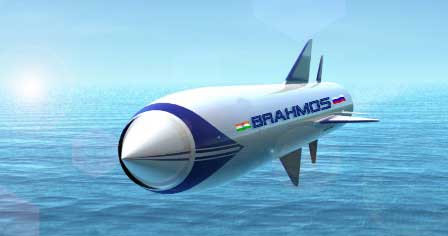
BrahMos Cruise Missile Project Sets The Gold Standard For Russian-Indian Joint Defence Projects

There has been a lot of talk recently about growing competition on India’s arms market, which is crucial for Russia. In Soviet times, Russia supplied some 75-80 per cent of the weapons for India’s Army, Air Force and Navy but now, as India matures financially, it is opting increasingly for more expensive western armaments. Back in the 1980s, German and French supplies brought India submarines and Mirage 2000 fighters and, in 1990, Israel broke in, making India one of its biggest sales markets, along with the US. Finally, the last ten years have seen a significant boost to Indian-US military and technical ties, with US’s sales of military transport and antisubmarine aircraft nearing $10 billion.  

In this situation, the best way for Russia to retain its position in India is to revise the trade paradigm of military and technical cooperation, shifting the focus to joint projects based on risk-sharing partnership, whereby the parties invest jointly in creation, production and promotion of products. Today, Russia and India have two joint defence projects, including the BrahMos programme for designing, producing and marketing supersonic stealth cruise missiles, and a project for building the MTA multirole medium transport aircraft. During Russian President Medvedev’s visit to India in December 2010, a contract was also signed to design India’s version of the Fifth Generation Fighter Aircraft (FGFA), which potentially means yet another joint undertaking. 

While the МТА programme has not yet shown any impressive progress, the BrahMos project can be seen as the ‘gold standard’ for joint military manufacturing programmes, effectively combining such factors as commercial profit for Russian and Indian partners, a tangible improvement in the combat ability of the Indian Army, Navy and Air Force, and development of new technologies, which is particularly important for India. Perhaps the project’s most valuable result is the accumulated experience of resolving difficult legislative, organisational and financial problems. In the future, this experience will be used for new joint programmes, including for the FGFA project.

What makes this programme so unique is that India is, in fact, buying one of its first standardised weapons systems that can be deployed by all three armed services - the Army, the Navy and the Air Force. 

The Indian Navy was the first customer for the BrahMos missile, which can be carried by a wide range of naval platforms, including most existing and future surface ships. The first ships to be equipped with BrahMos were Project 61ME (Kashin-Mod class) destroyers. Two of them, the Ranvir and the Ranvijay, will also be fitted with 8-missile vertical launch systems. Other ships that will carry BrahMos include three Project 15A (Kolkata class) destroyers, which are currently under construction in India, the future Project 15B destroyers, future Project 17A frigates, and three Project 11356M (Talwar class Batch 2) frigates now being built for India at the Yantar Shipyards in Kaliningrad. The future Talwar class Batch 3 frigates will also be equipped with the new missile, irrespective of where they are built, be it Russia or India.
In addition to surface ships, the Indian Navy plans to deploy BrahMos on submarines and, possibly, on land-based patrol aircraft. The suitable airborne carriers include the Russian Il-38SD ASW aircraft and, in a few years' time, the Boeing P-8I Poseidon ASW, which India has already ordered from the United States. It seems that the Indian Navy wants to make BrahMos its core weapon. The new missile’s long range (up to 280 km), high speed and powerful warhead will give Indian fighters not just a military advantage but absolute dominance over Pakistan’s ship groups, also creating a significant deterrent to China’s fast-growing navy.  

Another major customer is India’s land forces, which are buying BrahMos missiles in the mobile land-based configuration. These will be used not only against ships but also as high-precision weapons against land targets, such as command posts and key military, public and economic infrastructure facilities (the Block II LACM version). The Indian Army ordered 134 mobile anti-ship land-based BrahMos Block I missiles in 2006-2009 and another 240 land-attack BrahMos Block II in 2010, to a total of about 3 billion US dollars. 

Finally, the Indian Air Force is awaiting completion of research and development for an air-launched version of BrahMos, to be deployed primarily on Su-30 MKI fighters, with first deliveries expected in 2012. The Indian Air Force also plans to buy the BrahMos Block II version, which is designed to engage land targets. Currently, the Sukhoi Design Bureau is carrying out research and development to deploy the air-launched version of the missile on the Su-30 MKI. This will apparently become the focus for modernising the Su-30 MKI under the Super 30 programme. Indeed, the aircraft was designed in the early 1990s and is not due for an upgrade: an active phased array radar will be installed, along with BrahMos missiles.

All this is also of interest to Russian customers. Currently, BrahMos missiles and their Russian analogue, the Yakhont, are arguably the most powerful non-nuclear anti-ship weapons deployed in Russia and India and the Su-30 MKI is the only suitable carrier. The Russian Air Force plans, therefore, to order 28 Su-30 SM fighters, which will be technically similar to the Indian version, the only difference being that the Israeli and some French systems will be replaced by Russian ones. Russia’s Navy is also considering the possibility of buying 12 such aircraft for its own purposes.

In this respect, acquisition of BrahMos missiles would come in very handy. And it is not about Russian-made Yakhont missiles, but about BrahMos. From a military and technical perspective, this would mean acquisition by the Russian armed forces of the hugely effective Su-30 SM-BrahMos system, which would revolutionise the alliance of forces, for example, in the Black Sea region. And politically, it would underline the joint nature of the project. The Indians are extremely concerned about any symbols of their industrial and technological progress and acquisition by Russia of Indian products would be very much appreciated in a country that pays billions of dollars for Russian weapons every year. 

Strange as it might seem, the success of the BrahMos programme has boosted Russia’s chances of promoting its air and naval platforms on the Indian market. Normally, is the opposite would be the case: export of platforms opens up opportunities for missile supplies to be deployed on these platforms. But with BrahMos, it is the missiles that have become the driving force. So the Rubin Design Bureau is creating a special version of Russia’s new Project 677 (Аmur class) submarine to carry BrahMos anti-ship missiles as its main weapon system. This raises the submarine’s chance of winning India’s tender for six submarines worth up to $10 billion.

And last but not least, the BrahMos Aerospace joint venture has become a vehicle for further Russian-Indian projects, on an even larger scale and with greater Indian participation. The company is known to be already working on a new hypersonic missile. The unique experience accumulated since 1998 as part of the BrahMos project has paved the way for even more ambitious goals, including new strategic ballistic and cruise missiles.

http://indrus.in/

Design Freeze For Indo-Russian Hypersonic BrahMos II Missilies


MRCA Jet Deal Could Be Split: Ex-NSA told US

Although US firms lost out on India's mega fighter deal, former national security adviser M K Narayanan had told US diplomats that the $10 billion buy could be split into two contracts and that he would ask Prime Minister Manmohan Singh to keep both price and quality in mind.

The US aircraft were finally knocked on technical grounds, but higher pricing of fighters like the F-18 series put them at a disadvantage with regard to European rivals and discussion on the deal came up before Singh's Washington visit in 2009. According to WikiLeaks, a US cable from New Delhi spoke of undersecretary Bill Burns meeting with Narayanan to preview the visit during which Narayanan expressed personal interest in "counterterrorism deliverables" and suggested the Indian government may ultimately split the tender.

Narayanan also assured Burns of progress on civil nuclear cooperation ahead of the visit, including the imminent public announcement of reactor park sites for US firms and requested lifting of restrictions on high technology trade and expanded space cooperation.

In an indication of the clout he enjoyed in the PMO, Narayanan offered his personal assistance in brokering inter-ministerial approval of the counterterrorism deliverable, the proposed Law Enforcement and Security Cooperation Initiative.

In the one-on-one meeting, Narayanan suggested that the fighter tender may be split between two recipients, and that he would recommend that PM Singh take into consideration "both price and quality".

India had no "confrontation" with the US on outer space, and nothing stood in the way of further cooperation and this could fill the void left by the completion of the civil nuclear cooperation agreement. 

The Times OF India

NATO And India Would Work Together For Busting Chinese Hackers

Faced with a common cyber security threat from Chinese hackers, NATO is eyeing India as an ally in securing its computers that hold sensitive information and data against malware and Trojan viruses.

With US already signing a cyber security collaboration pact with India this July, the 28-nation American-led political and military alliance is of the view that it can collaborate with the South Asian information technology superpower in protecting the cyber world, one of the global commons.
"You have one of the most advanced cyber industries in the world... and information technology industries. The issue of cyber security is one that affects the United States, NATO and India no matter whether we are aligned or non-aligned," a senior NATO official told IANS at the alliance's headquarters here.

"The cyber world doesn't recognise alignments. It only recognises switches and servers. As a result, we are in this cyber world together, whether we like it or not.

"We better figure out a way to cooperate, particularly since it does matter that you have a neighbour (country) next door, which is pretty much involved in cyber issues, even far away. Because in the cyber world, we are equally close," the official, who did not want to be identified because of the organisation's rules, said.

Although he did not name any of India's neighbours, it was clear he was referring to China, which is suspected of being behind spy software attacks on American, NATO, Indian and Tibetan computers in the last half-a-decade, stealing highly classified military and security data.

In 2009, an investigation by Information Warfare Monitor (IWM) comprising researchers from Ottawa-based think-tank, SecDev Group, and the Munk Centre for International Studies at the University of Toronto, had blamed a spy network of Chinese hackers, called GhostNet, to have breached the firewalls of computers of NATO and other countries, including that of Tibetan leader Dalai Lama.
Their 2010 report claimed that major Indian defence establishments, including the Institute of Defence Studies and Analyses, National Security Council Secretariat, National Maritime Foundation, and armed forces units were targeted and secret presentations on weapons systems stolen by Chinese hackers.

A cyber security report earlier this year had suggested that the worldwide web-based attacks in 2010 were up 93 per cent from 2009.

As recently as July this year, 'Anonymous' hackers had targeted NATO in a cyber attack.
Just a month ahead of the latest attack, NATO had decided to create a special task force to detect and respond to such attacks by beefing up its cyber defence capabilities.

Its 2010 summit in Lisbon too recognised the growing sophistication of cyber attacks and set policies for the alliance to cooperation with partner countries.

NATO has already spelt out its intention of having India as a political and military partner country, considering its growing stature as a regional power.


http://ibnlive.in.com/

DRDO’s Next: Star Wars-like Weapons

Move aside Darth Vader and Luke Skywalker, DRDO is trying to develop its own set of Star Wars-like weapons. From laser dazzlers to control rioting crowds to high-powered lasers to destroy incoming missiles, DRDO is working on a slew of directed energy weapons (DEWs).

"Lasers are weapons of the future. We can, for instance, use laser beams to shoot down an enemy missile in its boost or terminal phase,'' said DRDO's Laser Science & Technology Centre (LASTEC) director Anil Kumar Maini, talking to TOI on Monday.

Incidentally, DRDO chief V K Saraswat himself has identified DEWs, along with space security, cyber-security and hypersonic vehicles, as focus areas in the years ahead. "LASTEC has the mandate to develop DEWs for armed forces,'' said DRDO's chief controller (electronics & computer sciences) R Sreehari Rao.

While conventional weapons use kinetic or chemical energy of missiles or other projectiles to destroy targets, DEWs decimate them by bombarding with subatomic particles or electromagnetic waves at the speed of sound. Apart from the speed-of-light delivery, laser DEWs cause minimal collateral damage.
DRDO, of course, often promises much more than it can deliver. But even the defence ministry's recent "technology perspective and capability roadmap'' identifies DEWs and ASAT (anti-satellite) weapons as thrust areas over the next 15 years, as was first reported by TOI.

The aim is to develop laser-based weapons, deployed on airborne as well as seaborne platforms, which can intercept missiles soon after they are launched towards India in the boost phase itself. These will be part of the fledgling ballistic missile defence system being currently developed by DRDO.

The US, incidentally, is already conducting tests of high-powered laser weapons on a modified 747 jumbo jet, the ALTB (airborne laser testbed), which direct lethal amounts of directed energy to destroy ballistic missiles during their boost phase.

It will, of course, take India several years to even conduct such tests. For now, LASTEC is developing "a 25-kilowatt'' laser system to hit a missile during its terminal phase at a distance of 5-7 km. "All you need is to heat the missile skin to 200-300 degree and the warhead inside will detonate,'' said Maini.

http://articles.timesofindia.indiatimes.com/

Indian Navy To Get INS Kamorta ASW Corvette Next June

INS Kamorta, the first in a series of four anti-submarine corvettes being built by the Kolkata-based Garden Reach Shipbuilders and Engineers (GRSE), a defence shipyard, will be delivered to the Navy in June 2012.
The shipyard, he said, was also constructing eight inshore patrol vessels for the Coast Guard. “We have also concluded negotiations with the Navy for construction of eight-Landing Craft Utility (LCU) for which contract will be signed shortly.”

On the offshore patrol vessel being designed and built for the Mauritius Police, he said the laying of keel for its first block would take place in September. “Although the contractual delivery period for the 75-metre-long, 1,200-tonne vessel is 42 months, we are trying to advance it.”

According to Rear Admiral (retd.) Sekhar, the construction of the Car Nicobar-class fast attack crafts (FAC) for the Navy would end this month when the shipyard would deliver the last vessel — the 10th — in the series. The shipyard was also eager to bag the contract from the Navy to build, in tandem with Mazagaon Dock Ltd., seven stealth frigates under project 17 A.

“They will be bigger than the Shivalik [class of stealth frigates], with more advanced weapon fit and better stealth features. The clearance for this is expected by year-end. We are also anticipating a follow-on order from the Navy for FACs. The FACs we have delivered have done exceedingly well and are of tremendous use in anti-smuggling, anti-poaching and anti-piracy operations,” he said.

He said the ongoing modernisation drive would help the shipyard speed up the construction of vessels. “We do integrated modular construction and with the new facilities, we can double our capacity to simultaneously build bigger ships.”

The yard, he said, had strengthened its Engineering Department, which had patented an easy-to-install portable steel bridge. “It's in high demand from the Border Roads Organisation as well as in the power sector. We got a turnover of Rs. 60 crore from this last year.”

The fully automated indigenous Common Helicopter Traversing System that the shipyard developed with technical support from the U.K.-based Mactagart Scott would be installed on the helicopter deck of the ASW corvettes under construction.  
www.thehindu.com

Thursday

HAL Dhruv Weapons system integration


HAL started Weapons system integration (WSI) project of DHRUV and is facing some delays however the work is going on in full swing.


 HAL hopes to use the ALH Dhruv platform to develop two variants, one for Navy and another for Air-force and Army. Currently prototype's of both variants are flying, HAL is using old Navy Dhruv ASW helicopter (IN701) which was rejected by navy to develop the Naval variant. 


People living around HAL Airport in Bangalore were seeing this aircraft undergoing Radar and Sonar tests. Wide array of sensor and weapons are being integrated into the helicopter to make it more lethal.


Air-force and Army Variant:
Roles:

Anti-Tank,
Close Air Support (CAS),
Combined Anti-Tank and CAS role, 
Ferry,
Air to Air combat 
Scout 
Weapons System:
# Turret Gun
# Rocket
# Air to Air Missiles
# Air to Ground Missiles (Anti-Tank)

Sensors System:
# Electronic Warfare (EW) Suit (Radar, Laser, Missile warning receivers)
# Flares and Chaff Dispenser (FCD)
# Fixed Sighting System
# Helmet Pointing System (HPS)
# Data Link
# Infrared jammer
# Infrared suppressor
# On-board inert gas generator (OBIGG)
# Integrated Architecture and Display System (IADS)

# Moving Map
# Ground Proximity Warning System (GPWS)

Naval Variant:
Roles:

# Anti-Submarine Warfare (ASW)
# Anti-Surface Vessel Warfare (ASV)
Weapons System:
# Torpedo
# Depth Charges
# Anti-Ship Missile

Sensor System:
# Surveillance Radar (360 Degrees)
# Low Frequency Dunked Radar (LFDR)
# Electronics Support Measure (ESM)
# Torpedo pre-setter and electronics
# Tactical Mission System (TMS)

# FCD

Wednesday

Samtel to build Cockpit Displays for Sukhoi-30MKI

Delhi-based Samtel Display Systems has vaulted a giant hurdle on the way to its declared goal of becoming a major supplier to the armed forces. After a year of rigorous flight trials in the Indian Air Force’s frontline Sukhoi-30MKI fighters, Samtel’s home-built cockpit displays have been certified as suitable for introduction into frontline service.

Multi-Function Displays (MFD), as these cockpit displays are termed, are ranged in front of the Su-30MKI pilots. They get digital signals from dozens of sensors on various aircraft systems and display these to the pilot on an easy-to-read screen. A quick glance across his MFDs tells the pilot how his aircraft is flying and fighting.

So far, a French company, Thales, has provided the Sukhoi-30’s high-tech MFDs. But Samtel has aggressively targeted this market, even choosing to go it alone rather than work through its joint venture with Thales. With Samtel’s price significantly cheaper than Thales’, Hindustan Aeronautics Ltd (HAL), which builds the Sukhoi-30 at its Nashik facility, has placed orders on Samtel.

Just the start
Puneet Kaura, executive director of Samtel, anticipates MFD orders for at least Rs 250 crore. So far, HAL has placed only a modest order on Samtel but Kaura says that is normal. In a programme like the Su-30, which involves building 280 fighters over a decade, the aircraft’s internal systems are ordered in small batches.

“The Su-30 MFDs are just the beginning,” says Kaura. “Samtel and HAL have set up a joint venture, Samtel HAL Display Systems (Samtel, 60 per cent; HAL, 40 per cent), to design and build MFDs for all HAL-built aircraft, including transport aircraft. With offsets applicable on all aircraft sales to India, Samtel will be offering them the capability to indigenously build MFDs for their aircraft.”

Samtel’s success with Su-30 MFDs seems likely to bring in another set of orders. When Samtel HAL Display Systems had offered to supply cockpit displays for the HAL-built Sitara Intermediate Jet Trainer (IJT), at a price significantly cheaper than the current foreign suppliers, HAL had responded with Yes, if your MFDs for the Su-30MKI pass the test.

Down the line
Samtel is also eyeing a major role in developing advanced cockpit displays for the Fifth Generation Fighter Aircraft (FGFA), which India and Russia are building collaboratively. Cockpit systems and avionics, which can amount to 30-35 per cent of the cost of a modern fighter, fall within India’s work share in the FGFA’s Preliminary Design Contract, likely to be signed during Russian President Medvedev’s visit later this year.

Meanwhile, Samtel has partnered the Defence research and Development Organisation laboratory, Defence Avionics Research Establishment, and the IAF, in developing ‘Smart MFDs’, a new generation of cockpit displays for the IAF’s Jaguar fighters. In these, embedded software cards allow the display to do its own symbology, doing away with the need for a separate display processor. Puneet Kaura says Samtel Display Systems will produce a fully indigenous engineering prototype of the Smart MFD by March 2011.

Unsurprisingly, all six aerospace giants competing in the IAF’s tender for 126 medium multi-role fighters have signed memoranda of understanding with Samtel Display Systems for manufacturing cockpit displays in case their fighter is selected. While these are pure ‘Build to Print’ arrangements, aimed at meeting offset obligations, those foreign vendors, too, would consider designing in India and sourcing globally from here, provided offset benefits are clea

HAL To Co-Design & Co-develop And Manufacture 200-250 FGFA Fighters


HAL would be joining Russia's Sukhoi Corporation to co-design, co-develop, and manufacture 200-250 FGFA; each separately for its respective air force. Joint development and production by HAL for the Indian Air Force are estimated to cost Rs 135,000 crore ($30 billion) or around Rs 500 crore each.

 
HAL's Chairman, Mr Ashok Nayak, told Business Line that the requirements for the Indian version were known but the work packages, that is, HAL's share in the design and development, were to be specified. “We would like to do as much as we can of the design aspect,” he said.

Although the Russian side was testing a single-seater FGFA prototype for its air force, he explained that the Indian version would demand lot of work in new design as well as changes for what could be a two-seater for the IAF.

Mr Nayak said he could not say how long it would take to build the prototypes and reach them to flight certification.

Reports say a preliminary design agreement is to be signed in December when the Russian President, Mr Dmitry Medvedev, comes to India.

Meanwhile, the defence public sector unit is creating a special team from existing and fresh engineers at its design bureau — the Aircraft Research and Design Centre — according to a person familiar with the programme, but who did not wish to be named. It would start with 30-50 engineers, and gradually take it to around 300 people.

HAL would also have to create some of the large infrastructure required for the FGFA, and the lead centre could be Nashik, which has a ready Sukhoi platform. Other divisions would chip in.

At the prototype development stage, HAL would primarily involve the many defence and scientific labs such as National Aerospace Laboratories in Bangalore.

A highly placed HAL official conceded that the FGFA design is extremely complex, and no country will trade the technology; you have to be an investing partner.

Stealth — the feature that makes it undetectable by enemy radars — is the main element of this futuristic aerial killer. For this it has to have a radar-eluding shape and configuration. Its supersonic cruising speed, advanced fire power and manoeuvring, modern avionics, and a 360-degree view set it apart from the fighter products of the 1990s.

The first versions have to make a few thousand flights before they are certified for operation. “Even after 25 years, the LCA (light combat aircraft) is still to be certified for operations,” the official observed.

Design alone takes 30-50 per cent of the cost of an aircraft. Building prototypes could be at least 10 per cent of the cost. The two partners are to equally share the costs from this stage onwards. The HAL version will also be jointly marketed to other countries, but may be made by either partner.

The Chief of Air Staff recently said FGFAs would be inducted by 2018, and would be the main part of a four-brand future air fleet. It includes the MMRCA (medium multi-role combat aircraft, currently being evaluated for purchase); the home-made LCA and the Sukhoi-30MkI that is already in use.

In January this year, Russia flew the first single-seater prototype (PAK FA) that its own air force will use. India joined the Russian programme (Sukhoi PAK/FA) in 2007 after a long consideration, while Sukhoi has been at it for at least five years.

Only two other FGFA dreams have taken off: US major Lockheed Martin is leading a pack of European nations in the Joint Strike Fighter (F-35); Lockheed Martin and Boeing are developing the F-22 Raptor. Japan and China are also said to be opening their separate fifth-generation accounts.

The Sukhoi/HAL FGFA will be far superior to the most advanced ones available today: among them the Boeing F/A-18E/F Super Hornet; Lockheed Martin F-16; the Dassault's Rafale that is still being developed; Russian MiG-35; Eurofighter Typhoon, or Sweden's Saab 39 Gripen; interestingly, all these are in the race for the IAF's Rs 40,000-crore purchase tender for 126 MMRCAs.

J-10 has been Deployed in Tibet For countering India


India Army To Order For 37 Crores Arjun Mark-II MBT Version


Limited technical trials with some major and minor improvements on Main Battle Tank (MBT) Arjun Mark-I, as part of MBT Arjun Mark-II, have been carried out by the Defence Research and Development Organisation (DRDO) in the deserts of Rajasthan.


      Defence Acquisition Council (DAC) has cleared the proposal for placement of indent for 124 Nos. of MBT Arjun Mark-II on Heavy Vehicles Factory (HVF), Avadi, Chennai. Placement of indent by the Army on Ordnance Factory Board (OFB) is being further processed.


      The likely estimated cost of each MBT Arjun Mark-II with ail major/minor improvements will be approximately Rs.37 crore.       The first batch of MBT Arjun Mark-II is likely to be productionised by 2015.

www.defenseworld.net

Indian LCA-HAL Tejas NEW PICS


IAF faces shortage of 400 pilots


The Indian Air Force is facing shortage of about 400 pilots in various categories and plans to fill the vacancies within the next two years, Chief of Air Staff P V Naik said on Tuesday.

"There is shortage of about 300 to 400 pilots. We have upped our intake rate. It will take a year or two to fill up the posts," Air Chief Marshal Naik said at a joint press conference with his British counterpart Stephen Dalton on the final day of the 15-day India-UK joint air exercise 'Indradhanush' at at Kalaikunda air base in West Bengal's West Midnapur district.

While Mirage-2000, Sukhoi 30 and MiG-27 from the Indian side participated in the exercise, the Royal Air Force showcased its Eurofighters, Typhoons and airborne warning and control system. An IAF AWACS aircraft also participated in the exercise for the first time.

Pointing out that the Air Force had more than 32 squadrons Naik said that there was a need to increase their number. "We also need more satellites, so that we become a networked air force."

With India planning to acquire 126 Medium-weight multi role combat aircraft a cost of $ 12 bn (about Rs 5,300 crore), the air force has submitted the test reports of MMRCAs like the F-16, F-18, Typhoon, Gripen and MiG 35 to the government on July 31.

"The MMRCAs will help us tremendously. I have no reservation on any of them. Although our present capability is sufficient to complete our mission of protecting the country from any threat from air or space," Naik said.

In reply to a question, Naik said he was not aware of the government further short-listing two out of the six models of MMRCAs it had chosen.

Naik said that the Mach-I version of the indigenous light combat aircraft would be ready around the middle of next year and it would take another three years to complete the Mach-II version. The initial LCA squadrons would be located at Surut in south India.

Indo-Russian PakFA Pact To Be Sign soon


Indian LCA Hal Tejas PICS


Tuesday

Indian Advanced Medum Combat Aircraft MCA


India has embarked upon an ambitious project to indigenously design and develop a fifth generation Advanced Medium Combat Aircraft (AMCA) by 2017.

The government released Rs. 100 crore last month to the Bangalore-based Aeronautical Development Agency (ADA), which will spearhead the project, to prepare feasibility studies in 18 months. The ADA is an autonomous organisation under the Ministry of Defence.

Disclosing this to reporters here on Saturday, ADA Director and Programme Director (Combat Aircraft) P.S. Subramanyam said AMCA, when developed and produced, would probably be the first medium combat aircraft with 20 tonne weight in the world. Similar aircraft being developed by the United States and Russia are in the range of 30 to 35 tonnes.
ADA seeks $2 bn for advanced medium combat aircraft

the Aeronautical Development Agency (ADA), an autonomous body under the department of defence research and development, Ministry of Defence,
is seeking a $2-billion (approximately Rs 9,060 crore) fund for the development of the advanced medium combat aircraft (AMCA).

“We have just started working on this fifth-generation aircraft, for which we had already received sanctions to the tune of Rs 100 crore. The way the government is cooperating, I am able to say that we will receive the funding ($2 billion) in the next 18 months,” PS Subramanyam, programme director (combat aircraft) and director of ADA, told Business Standard.


The AMCA will be designed with a small radar cross-section and will feature internal weapons and advanced electronic systems. The twin-engined, stealth-multirole fighter will be equipped with missiles like the Defence Research and Development Organisation (DRDO)’s Astra, besides stand-off and precision weapons.


“
The $2-billion fund will initially be utilised to develop two technology demonstrators and seven prototypes. The first flight test is expected to take place by 2017,” he said on the sidelines of the Aviation Conclave 2010, which concluded here on Saturday.

Stating that the AMCAs were aimed at bridging the gap between light combat aircraft (LCA) Tejas and Sukhoi heavy weight fighters, Subramanyam said though Russia and the United States were into designing of similar aircraft that weigh 30-35 tonne, the AMCA would weigh only 20 tonne.

“
Though the AMCAs were primarily being designed to meet the requirements of the Indian Air Force, we are contemplating rolling out a new variant for the Indian Navy as well,” he said, adding ADA would commence research and development on the six-generation AMCA aircraft shortly.

Indian Secret 'K' Missile Family K-4 And K-15


Related Posts Plugin for WordPress, Blogger...
Web Analytics