Showing posts with label Missile. Show all posts

Saturday

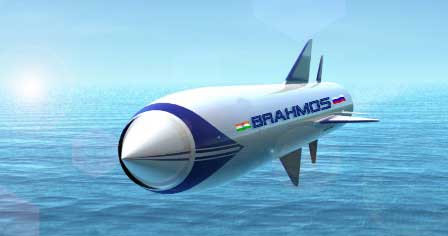
BrahMos Cruise Missile Project Sets The Gold Standard For Russian-Indian Joint Defence Projects

There has been a lot of talk recently about growing competition on India’s arms market, which is crucial for Russia. In Soviet times, Russia supplied some 75-80 per cent of the weapons for India’s Army, Air Force and Navy but now, as India matures financially, it is opting increasingly for more expensive western armaments. Back in the 1980s, German and French supplies brought India submarines and Mirage 2000 fighters and, in 1990, Israel broke in, making India one of its biggest sales markets, along with the US. Finally, the last ten years have seen a significant boost to Indian-US military and technical ties, with US’s sales of military transport and antisubmarine aircraft nearing $10 billion.  

In this situation, the best way for Russia to retain its position in India is to revise the trade paradigm of military and technical cooperation, shifting the focus to joint projects based on risk-sharing partnership, whereby the parties invest jointly in creation, production and promotion of products. Today, Russia and India have two joint defence projects, including the BrahMos programme for designing, producing and marketing supersonic stealth cruise missiles, and a project for building the MTA multirole medium transport aircraft. During Russian President Medvedev’s visit to India in December 2010, a contract was also signed to design India’s version of the Fifth Generation Fighter Aircraft (FGFA), which potentially means yet another joint undertaking. 

While the МТА programme has not yet shown any impressive progress, the BrahMos project can be seen as the ‘gold standard’ for joint military manufacturing programmes, effectively combining such factors as commercial profit for Russian and Indian partners, a tangible improvement in the combat ability of the Indian Army, Navy and Air Force, and development of new technologies, which is particularly important for India. Perhaps the project’s most valuable result is the accumulated experience of resolving difficult legislative, organisational and financial problems. In the future, this experience will be used for new joint programmes, including for the FGFA project.

What makes this programme so unique is that India is, in fact, buying one of its first standardised weapons systems that can be deployed by all three armed services - the Army, the Navy and the Air Force. 

The Indian Navy was the first customer for the BrahMos missile, which can be carried by a wide range of naval platforms, including most existing and future surface ships. The first ships to be equipped with BrahMos were Project 61ME (Kashin-Mod class) destroyers. Two of them, the Ranvir and the Ranvijay, will also be fitted with 8-missile vertical launch systems. Other ships that will carry BrahMos include three Project 15A (Kolkata class) destroyers, which are currently under construction in India, the future Project 15B destroyers, future Project 17A frigates, and three Project 11356M (Talwar class Batch 2) frigates now being built for India at the Yantar Shipyards in Kaliningrad. The future Talwar class Batch 3 frigates will also be equipped with the new missile, irrespective of where they are built, be it Russia or India.
In addition to surface ships, the Indian Navy plans to deploy BrahMos on submarines and, possibly, on land-based patrol aircraft. The suitable airborne carriers include the Russian Il-38SD ASW aircraft and, in a few years' time, the Boeing P-8I Poseidon ASW, which India has already ordered from the United States. It seems that the Indian Navy wants to make BrahMos its core weapon. The new missile’s long range (up to 280 km), high speed and powerful warhead will give Indian fighters not just a military advantage but absolute dominance over Pakistan’s ship groups, also creating a significant deterrent to China’s fast-growing navy.  

Another major customer is India’s land forces, which are buying BrahMos missiles in the mobile land-based configuration. These will be used not only against ships but also as high-precision weapons against land targets, such as command posts and key military, public and economic infrastructure facilities (the Block II LACM version). The Indian Army ordered 134 mobile anti-ship land-based BrahMos Block I missiles in 2006-2009 and another 240 land-attack BrahMos Block II in 2010, to a total of about 3 billion US dollars. 

Finally, the Indian Air Force is awaiting completion of research and development for an air-launched version of BrahMos, to be deployed primarily on Su-30 MKI fighters, with first deliveries expected in 2012. The Indian Air Force also plans to buy the BrahMos Block II version, which is designed to engage land targets. Currently, the Sukhoi Design Bureau is carrying out research and development to deploy the air-launched version of the missile on the Su-30 MKI. This will apparently become the focus for modernising the Su-30 MKI under the Super 30 programme. Indeed, the aircraft was designed in the early 1990s and is not due for an upgrade: an active phased array radar will be installed, along with BrahMos missiles.

All this is also of interest to Russian customers. Currently, BrahMos missiles and their Russian analogue, the Yakhont, are arguably the most powerful non-nuclear anti-ship weapons deployed in Russia and India and the Su-30 MKI is the only suitable carrier. The Russian Air Force plans, therefore, to order 28 Su-30 SM fighters, which will be technically similar to the Indian version, the only difference being that the Israeli and some French systems will be replaced by Russian ones. Russia’s Navy is also considering the possibility of buying 12 such aircraft for its own purposes.

In this respect, acquisition of BrahMos missiles would come in very handy. And it is not about Russian-made Yakhont missiles, but about BrahMos. From a military and technical perspective, this would mean acquisition by the Russian armed forces of the hugely effective Su-30 SM-BrahMos system, which would revolutionise the alliance of forces, for example, in the Black Sea region. And politically, it would underline the joint nature of the project. The Indians are extremely concerned about any symbols of their industrial and technological progress and acquisition by Russia of Indian products would be very much appreciated in a country that pays billions of dollars for Russian weapons every year. 

Strange as it might seem, the success of the BrahMos programme has boosted Russia’s chances of promoting its air and naval platforms on the Indian market. Normally, is the opposite would be the case: export of platforms opens up opportunities for missile supplies to be deployed on these platforms. But with BrahMos, it is the missiles that have become the driving force. So the Rubin Design Bureau is creating a special version of Russia’s new Project 677 (Аmur class) submarine to carry BrahMos anti-ship missiles as its main weapon system. This raises the submarine’s chance of winning India’s tender for six submarines worth up to $10 billion.

And last but not least, the BrahMos Aerospace joint venture has become a vehicle for further Russian-Indian projects, on an even larger scale and with greater Indian participation. The company is known to be already working on a new hypersonic missile. The unique experience accumulated since 1998 as part of the BrahMos project has paved the way for even more ambitious goals, including new strategic ballistic and cruise missiles.

http://indrus.in/

Design Freeze For Indo-Russian Hypersonic BrahMos II Missilies


Tuesday

Chinese new BP-12A Weapon System


Indian Secret 'K' Missile Family K-4 And K-15


Defence Research And Development Organisation Officials Are Planning Missiles Launches Before the Year Ends


Two months after its embarrassing failure in the test firing of nuclear-weapons capable, surface-to-surface Prithvi-II ballistic missile from Chandipur in Orissa, the Defence Research Development Organisation officials are planning a slew of high-profile missile launches before the year ends.

On September 24, the Prithvi-II missile with a maximum range of 350 km dropped off a few seconds after it was fired from a mobile launcher from Integrated Test Range in Chandipur-on-sea of Orissa. DRDO so far has been silent on the failure on the missile which has been inducted into the Army.
DRDO sources said that on November 25, the nuclear-capable and surface-to-surface single stage Agni-I missile would be test-fired by personnel of the Strategic Forces Command as part of Indian Army's user-training exercise from Wheeler Island on Bay of Bengal. The missile was last successfully test-fired on March 28. Like Prithvi-II, Agni-I has also been inducted into the Army. The missile which has a range of 700 km, can carry payloads weighing up to 1000 kg. Agni-1, with its rail and road mobility can target most cities in Pakistan without having to be launched from the border. Agni-I is designed to bridge the gap between indigenously built short-range Prithvi, already deployed in the Army, and medium range Agni-II, that has a range of more than 2,000 km. 
On December 2, DRDO would test-fire supersonic cruise missile Brahmos that has a range of 290 kms. It was last tested successfully on September 5.
Similarly, the 2,000 km plus range surface-to-surface nuclear-capable missile Agni-II would be test-fired from Wheeler Island between December 8 and 12. The missile was last tested successfully on May 17 this year after two successive failures last year. The 20-metre long Agni-II is a two stage, solid-propelled ballistic missile. It has a launch weight of 17 tonnes and can carry a payload of 1000 kg over a distance of 2000 km. In February this year, the 3,500-km plus range Agni-III was also successfully test-fired.

Preparations Are Underway For The Maiden Test Of The Agni-II Plus Missile

Agni-II Plus is a modified version of the Agni-II strategic missile and the test will be conducted from the Integrated Test Range (ITR) on Wheeler Island in the Bay of Bengal.

The success of this maiden flight test of a complete nuclear-capable missile, also known as Agni-II prime or A-2, developed by the Defence Research Development Organisation (DRDO), will set a new chapter in the India's missile programme.

According to Director General of DRDO V K Saraswat, the new missile would have a higher range, higher performance with respect to the thrust and weight ratio than Agni-II missile which has a range of 2,000 km.

Being an upgraded version of the Agni-II, the new missile, sources said, would be more accurate and powerful.

The new missile would perform more better at various levels in terms of accuracy, strength and distance covered in comparison to Agni-II missile.


The surface-to-surface missile can hit targets in between 2,500 km and 3,000 km thereby bridging the gap between the Agni II missile which has a range of 2,500 kms and the Agni III missile having a range of 3,000 km.

The Agni II Plus missile could also carry extra fuel and will have a new motor in its re-entry vehicle for better maneuverability and an improved navigation system.

Monday

Agni-II Plus Missile Test Fails In Orissa

India test-fired an upgraded version of the Agni-II nuclear-capable intermediate range ballistic missile off the Orissa coast. The test was declared a failure.

The latest version of the "Agni" series missile is described as a two-stage, solid propellant rail and road mobile missile.


Scientists at the Defence Research and Development Organisation (DRDO) said "the modified version of Agni-II will have better accuracy and range."

While the present Agni-II missile has a strike range of 2000 km and Agni-III can target a distance up to 3500 km, the strategic new missile, Agni-II plus or premier would bridge the gap between Agni-II and Agni-III, a defence source said.


Taiwan Confirms Mass Producing Cruise Missiles

Taiwan has confirmed for the first time that it is mass-producing cruise missiles, despite fast warming ties with China.

 "Mass production of indigenous weapons like the ones under the code names of 'Chichun' (Lance Hawk) and 'Chuifeng' (Chasing Wind) is very smooth," Deputy Defence Minister Chao Shih-chang told parliament Wednesday.


"The problems with key parts and components that had previously stalled the manufacturing have been tackled," he said in reply to queries raised by legislator Lin Yu-fang.

The Chichun project refers to the Hsiungfeng 2E cruise missile, Taiwan's answer to the US-made Tomahawk. Chuifeng is a project to develop the island's long-anticipated supersonic anti-ship missile.
Chao declined to specify the range of the missiles or the number to be put into service.

"Surely the cruise missiles will be able to boost Taiwan's self-defence capabilities," Alexdander Huang, a professor of Tamkang University in Taipei, told AFP.


"But that's it. Taiwan is unlikely to use such weapons to take the first strike against the targets on the mainland."

The cruise missiles could be launched from land or sea, and would be capable of hitting airports and missile bases in southeast China, as well as cities such as Shanghai and Hong Kong, local media said.

Taiwanese experts estimate China's People's Liberation Army currently has more than 1,600 missiles aimed at the island.

Tensions across the Taiwan Strait have eased since Ma Ying-jeou of the China-friendly Kuomintang came to power in 2008 on a platform of beefing up trade links and allowing in more Chinese tourists.

However, China still refuses to renounce the possible use of force against the island in its long-stated goal of re-taking Taiwan, which has ruled itself since the end of a civil war in 1949.

The Pentagon said in an annual report to Congress earlier this year that China's military build-up against Taiwan has "continued unabated" despite improving political relations.

Sunday

Taiwan Navy Opens Anti-ship missile base in eastern Taiwan


The nation's navy opened yesterday a military base with Hsiung Feng II anti-ship missiles in eastern Taiwan to the media for the first time.

Officers and their men gave a demonstration of operations concerning installing and hanging the missiles onto the right positions 

for launching as well as removing them from missile racks afterward.

The naval missile base, called “Guhai” (“fortifying the sea” in Chinese) military base, is nestled in a mountain region in eastern Hualien.


With a camouflage that disguises the military base as an area for ordinary building compounds, the roof tiles of the structures have the special effects of deflecting satellite searches by unfriendly forces or parties.


There are housing units for residents and commercial hotels for tourists near the base.


The structures housing the missiles and troops can be easily mistaken for villas at a tourist resort.


Some of the missile facilities are concealed and some others are mounted on heavy-duty trucks for high mobility.


Troops handling Hsiung Feng II anti-ship missiles have regularly taken part in large-scale military exercises, including live fire tests in war games.


But this is the first time the navy has let reporters make an onsite tour of the military facilities.


The Hsiung Feng II anti-ship missiles measure 4.8 meters in length and can hit targets more than 100 kilometers away.

Chinese DF-21C Anti-ship Ballistic Missile


India to Intercept Missiles At 150 km Altitude

Defence scientists in the country are set to raise the bar for excellence by trying to shoot down a missile at an altitude of 150 kilometres later this year.

Defence scientists have been able to intercept a missile at an altitude of 80 km and are now planning to aim higher.

"The trials are expected later this year," VK Saraswat, Director General, Defence Research and Development Organisation (DRDO) told reporters on the sidelines of the 98th Indian Science Congress in Chennai.

DRDO to shoot down missile at 150 km altitude

He said the DRDO scientists were also planning to raise the altitude for interception gradually to upto 300 km.

The DRDO-developed missile shield uses a system of long range radars and long-range missiles to shoot down incoming enemy missiles.

The system has been tested successfully three times since December 2006.


The Prithvi interceptor missile has been codenamed PDV, a two stage rocket powered by solid propellants.

Asked about the failure of the recent Agni-II Prime tests, Saraswat blamed it on the quality of components procured from the industry.

He said the defence scientists have recovered the entire hardware of the last month's failed test of the Agni-II Prime missile and would soon come out with a detailed analysis of the event.

Saraswat stressed on improving the quality of products it receives from the industry.

He said the DRDO will now have to go beyond quality checks for the components it sources from the industry and ensure control on the quality of manufacturing processes.

He said the DRDO has also decided to launch a commercial arm to market its technologies having civilian and paramilitary applications.

"We have new users coming up in the paramilitary forces and some of our technologies also have civilian applications.

So, taking into account the volume of spin-offs a commercial arm is planned," Saraswat said.

He said DRDO has transferred technology for its products to around 15 firms and has earned Rs 20 crore from the deals.

The DRDO chief said the organisation saw a business potential of up to Rs 70 crore per year in meeting the demand of the paramilitary forces.

The DRDO can customise some of the weapons used by army for the paramilitary forces, he said.

The DRDO has started collaborative research work with Indian Institute of Technology (IIT) Madras by taking 30,000 square feet space at the IIT Madras Technology Park in Chennai.

"I plan to have about 20-25 scientists at the research centre that would work on cyber security, nano material, aeronautics and others," Saraswat said.

To a question, he said the DRDO did not have any programme to build a military satellite.

On the induction of the Light Combat Aircraft - Tejas into the Air Force, Saraswat said the documentation related to the Initial Operation Clearance of the aircraft will be handed over the the IAF in the presence of Defence Minister AK Antony on January one.

Saturday

MBDA At Aero India 2011


MBDA is bringing in missile power at the Aero India 2011. Proposed in the frame of Mirage 2000 upgrade program, MICA air-to-air missile will also be displayed on MBDA stall. MICA is the only missile in the world featuring two interoperable seekers (active radar and imaging infrared) to cover the spectrum from close- in dogfight to long beyond visual range. It is sometimes referred to as the silent interceptor as it is extremely hard to defend against. For the Indian Air Force MMRCA missile solutions, MBDA is displaying Meteor, Dual Mode Brimstone, Taurus KEPD 350 and SCALP/Storm Shadow. MBDA is offering them for the three European aircraft options lined up for the IAF ’s MMRCA competition, Rafale, Eurofighter Typhoon and Gripen.

MBDA says that Meteor, if procured, the IAF will benefit from a performance that will ensure launch aircraft survivability while minimising missile usage and, therefore, whole life cost. The Dual Mode Brimstone is MBDA ’s most recent developments and a key UK RAF weapon currently being deployed operationally in theatre in conditions not dissimilar to those that the IAF would most likely have to operate in. DMB is the only weapon currently available that can engage fast moving land and sea targets with high precision. Capable of engaging a wide variety of target types and operating safely and effectively in the complex littoral area, DMB offers a major operational advantage in being able to deal with the swarming FIAC (Fast Inshore Attack Craft) threats. The Eurofighter Typhoon equipped with DMB has a distinct advantage over helicopters as it can rapidly confront a threat which could be engaged asymmetrically optimising the effectiveness. Significantly, DMB has been used with the Litening pod designator which is already in service with the IAF. As for Deep Strike operations, MBDA has two cruise missiles to offer for the MMRCA programme. Taurus KEPD 350 for the Eurofighter Typhoon and Gripen and SCALP/Storm Shadow for the Rafale. Both weapon systems are in service and have proven their unerring and unmatched ability to fulfil and indeed exceed the requirements stipulated by the IAF in terms of range, target effect and CEP (Circular Error Probable). For ALH DHRUV and LCH helicopters, MBDA is offering PARS 3. This fire and forget system developed for Germany ’s Tiger helicopter is capable of targeting and defeating a wide range of mobile and stationary ground targets from latest generation armour-protected vehicles to bunkers with pinpoint accuracy. 
For pilot safety, the missiles, once launched, navigate autonomously to their respective targets without requiring further input from the gunner thereby allowing the helicopter to quit its position should there be a danger. Pars 3 on the Tiger features a four-missile launcher. However, India prefers a twin variant and in this respect MBDA has been sourcing an Indian defence industry partner to develop this alternative design. India has asked for trials of the system. With these trials due soon, Aero India will be an important shop window for this system. For MRH HELICOPTER, MBDA is offering MARTE ER. Marte ER has already been integrated and qualified on the medium- range NH90 helicopter. Marte ER adds a turbo-engine motor that takes the missile’s range out to over 100km. With India actively looking for a MRH (medium range helicopter) capabilities, Marte ER should bea major talking point during the show.

MBDA is also offering ASRAAM for JAGUAR Upgrade. The Jaguars of the IAF are undergoing upgrades to extend their life through to the end of the decade. An important part of this upgrade will depend on the choice of self-protection air-to-air missiles to replace the currently deployed R550 Magic. There is space for only one such weapon on the Jaguar’s overwing station and MBDA ’s ASRAAM (already in service with the UK and Australian air forces) would provide an optimum solution given its ability to provide short to medium range protection passively. Overwing pylons call for quick missile separation to avoid contact with the aircraft ’s wing. ASRAAM is the fastest, lowest drag SRAAM weapon on the market. This speed not only provides safe separation, it also guarantees “first shot first kill ” to avoid getting involved in a dogfight. As the Jaguar is a low-flying aircraft, a threat could well come from a higher altitude. ASRAAM again offers a major advantage here in its unmatched “snap-up” capability, the missile’s ability to rapidly divert upwards once fired. MBDA will also be promoting its Fire Shadow loitering munitions, the family of Exocetanti-ship weapons as well as Europe’s most significant anti- air defence missile development, namely Aster. Similarly the Milan anti-armour weapon (produced by BDL) will
be on display as evidence of over 30 years of industrial partnership between MBDA and India.

Brazil ignores India, sells arms to Pakistan

 Has Brazil sold arms to Pakistan overlooking Indian concerns? A section of Brazilian media has carried reports about a Pakistan Air Force transport aircraft being loaded with missiles and bombs last month at Sao Jose dos Campos airport near Sao Paulo.


If these reports are true, the move will be received by surprise as just last year, Brazil had cancelled a contract to sell anti-radiation missiles - meant to destroy radars - to Pakistan. It was widely believed that the deal was cancelled keeping in mind the Indian concerns.

There is no official confirmation so far on the nature of cargo loaded on the C-130 transport aircraft of the Pakistan Air Force. One report claimed that it was short range air to air missile 1-A Piranha, whose improved version MAA-1B is still under development. Other claim has been that the cargo was unguided bombs based on the US MK Series.

The reports also claimed that the sale was kept a secret due to a confidentially clause in the contract.

But the ammunition mentioned in the reports is old. Piranha missiles were used in now retired Mirage III fighter jets of the Brazilian Air Force. PAF still flies a variant of Mirage III.

According to the report, the missiles were loaded in two C-130 aircraft of PAF and the exact value of the deal in terms of money was still not known.

As the veracity of these reports remains to be verified, some experts felt that the timing of such a move by Brazil was surprising as the Latin American country was keen to engage India in expanding defence cooperation.

Just three months ago, Prime Minister Manmohan Singh was in Brazil where it was decided to enhance defence ties. The two sides had agreed to place defence attaches in each others country. Brazil has a strong aviation sector and there have been talks to explore joint ventures.

By not selling anti-radiation missiles to Pakistan, Brazil had sent a strong message to India and opened the way for striking new deals.

India and Brazil have common interests in the military sector as both have big armed forces.

Chinese Aircraft Carrier Killer DF-21D


The U.S. Navy believes that the long rumored Chinese anti-ship ballistic missile, the DF-21D, is operational. This despite the fact that, as far as anyone knows, or will admit, the complete system has not been tested. There are hints that there were some tests last Summer, and that all the components of the system are present and working. There are photos of DF-21Ds on TELs (transporter erector launcher vehicles), and announcements of new units recently activated for the 2nd Artillery Missile Brigade, equipped with DF-21 missiles. Since all that took place a few months ago, Chinese officials have spoken about not being as concerned about American aircraft carriers. But the key event occurred last August.
Back then, China launched another "remote sensing" satellite, joining two others in a similar orbit. These three birds are moving in formation, at an altitude of 600 kilometers, across the Pacific. Equipped with either radar (SAR, or synthetic aperture radar) or digital cameras, these three birds can scan the ocean for ships, even though the Chinese say their purpose is purely scientific. A typical SAR can produce photo quality images at different resolutions. At medium resolution (3 meters) the radar covers an area 40x40 kilometers. Low resolution (20 meters) covers 100x100 kilometers. This three satellite Chinese posse looks suspiciously like a military ocean surveillance system. This is the missing link for the rumored Chinese ballistic missile system for attacking American aircraft carriers.
For nearly five years, there have been stories (in the West) about how China was working on targeting systems for its ballistic missiles, that would enable them to seek out and hit aircraft carriers. Such sensors would use infrared (heat seeking) technology for their final approach. This sort of thing had been discussed for decades, but China appeared (according to pundits and headline hungry media) to be putting together tactics, and missile systems, that could make this work. The key was having multiple sensor systems, either satellites, submarines or maritime patrol aircraft, that could find the general location of the carrier, before launching the ballistic missile (like a DF-21, with a range of 1,700 kilometers). Those sensors appear to be operational, as do the other elements needed to make the DF-21D work.


Taiwan's Secret Missiles


A government official revealed that Taiwan had developed a IRBM (Intermediate Range Ballistic Missile) with a range of 2,000 kilometers. The missile was successfully tested three years ago. Nothing was said about production. Seven years ago, Taiwanese officials discussed developing a 2,000 kilometer range IRBM, and manufacturing 30 of them, along with 120 with a range of 1,000 kilometers. Over the last decade, there have been reports of several different Taiwanese ballistic and cruise missiles developed for use against China. But few of these have been produced, or have been manufactured under great secrecy. Meanwhile, China has deployed about 1,500 ballistic missiles within range of Taiwan. A decade ago, Taiwan apparently deployed 50 Tien Chi (Sky Spear) SRBM (Short Range Ballistic Missiles). Half were in silos on Tungyin Island, and the rest in some other location. Like most of Taiwan's Surface-to-surface missiles, it was based on a locally developed surface-to-air missile (in this case, Tien Kung 2/Sky Bow 2), with the addition of a booster to extend the range. The Tien Chi had a range of about 500 kilometers, but a small (100 kg/220 pound) warhead. The new IRBMs have a warhead of about half a ton.
Taiwan does not have nuclear weapons, although the nation possesses the technical resources to develop such weapons, and perform the engineering work to make these nukes function in a ballistic missile. But Taiwan would be taking a big risk to attempt development of nukes. If China got word of the project, before useable warheads were in service (and thus able to dissuade China from attacking), the Chinese might well invade right away, or at least try to)
Strategy Page.

North Korea Updates A Cold War Classic:RSM-25


Japanese intelligence believes that North Korea is close to putting into service their new RSM-25 (or Musudan) ballistic missile. It was only last year that a military parade in North Korea featured the first public appearance of the long rumored RSM-25 missile. This is a variant of the Russian SS-N-6 submarine launched missile. The North Korean version is believed to weigh 20 tons and have a range of over 3,000 kilometers. The Japanese believe the range of the North Korean missile may be as much as 4,000 kilometers. It is believed that the North Korean version, using solid fuel rockets, was tested successfully two years ago.
The SS-N-6 is a 1960s vintage ballistic missile, and is known in Russia as the R-27. SS-N-6 is a NATO code name for the R-27. This was Russia's first true submarine launched ballistic missile (SLBM), and sixteen of them were carried in Yankee class SSBNs (missile carrying nuclear submarines.) The 12 ton R-27 had a range of 2,800 kilometers and used storable liquid fuel. This means it can be ready for launch in less than half an hour.
After the R-27 was replaced by more modern missiles in the 1970s, the missile continued to be used for scientific research until 1990. By that time, 492 R-27s had been launched, 87 percent of them successfully.
It would be very embarrassing for the Russians if someone had illegally exported SS-N-6/R-27 missiles to North Korea. It is more likely, and was been reported a few years ago, that the Russian organization that designed the R-27   illegally sold the plans to North Korea. This was supposed to have happened sometime in the 1990s, and the main reason for the deal was so that North Korea could obtain the R-27 missile guidance technology. The Russians kept improving the guidance system of the R-27 through the 1980s, while the North Koreans were desperate for missile guidance technology. But it appears that the North Koreans built at least one R-27, and may have incorporated R-27 technology in some of their other long range ballistic missiles. The North Koreans were apparently pleased with the R-27 design, and spent the time and effort to change it so that Musudan used more reliable solid fuel rocket motors, than the original liquid fuel ones.
Strategy Page.

More Mythical Mystery Missiles From Iran


Iran recently announced that it had delivered the first new type of ballistic missile, the Qiam 1, to the Iranian Air Force. Few details were given, other than the missile was liquid fueled, had no fins and that its warhead could maneuver as it plunged to earth (which makes it more difficult for anti-missile systems to hit). The Qiam 1 looks their existing Shahab 3 ballistic missile. This is one weapon the Iranians have put a lot of money and effort into. It was known that they were building an extended range (from 1,300 to 1,800 kilometer) version of their Shahab 3 ballistic missile. The new version (Qiam 1?) puts all of Israel within range, even if fired from deep inside Iran. Chemical warheads (with nerve gas) are thought to be available for these missiles. But Israel has threatened to reply with nuclear weapons if the Iranians attack this way. Iran would probably get the worst of such an exchange, and the Iranians are aware of this.
This Shahab 3/Qiam 1 missiles are basically 1960s technology, with the addition of GPS guidance. Russian and North Korean missile technology has been obtained to make these missiles work. This has resulted in missile designs that apparently will function properly about 80 percent of the time, and deliver a warhead of about one ton, to a range of some 1,700 kilometers, to within a hundred meters of where it was aimed. By current standards, this is a pretty effective weapon.
In general, however, such vague and threatening weapons announcements are quite common for the Iranians. Last year, for example, they announced that they had developed an armed UAV, with a range of 1,000 kilometers. Pictures of this new weapons showed what appeared to be a copy of 1950s era American cruise missile, or target drone. These, in turn, were based on a similar weapon, the German V-1 "buzz bomb" that was used extensively in World War II to bomb London. The Iranian "Karar" UAV has the benefit of more efficient jet engines, more effective flight control hardware and software, and GPS navigation. Karar is not a wonder weapon, but the Iranians are depending on a clueless international mass media, and their own citizens, to believe it is.
In the last few years Iran has announced many similar weapons. There was, for example, a domestically designed and manufactured, helicopter gunship and another UAV with a range of 2,000 kilometers. Recently, there have also been revelations of heavily armed speed boats, miniature submarines, new artillery rockets and much more. Two years ago they showed off a new Iranian made jet fighter, which appeared to be a make-work project for unemployed engineers. It was a bunch of rearranged parts on an old U.S. made F-5 (which was roughly equivalent to a 1950s era MiG-21). The new fighter, like so many other Iranian weapons projects, was more for PR than for improving military power.
If you go back and look at the many Iranian announcements of newly developed, high tech, weapons, all you find is a photo op for a prototype. Production versions of these weapons rarely show up.   Iranians know that, while the clerics and politicians talk a tough game, they rarely do anything. Even Iranian support of Islamic terrorism has been far less effective than the rhetoric. The Iranians have always been cautious, which is one reason Arabs fear them. When the Iranians do make their move, it tends to be decisive. But at the moment, the Iranians have no means to make a decisive move. Their military is mostly myth, having been run down by decades of sanctions, and the disruptions of the 1980s war with Iraq. Their most effective weapon is bluster, and, so far, it appears to be working.
Not all of the clerics that run the country are eager to go to war with Israel, or even threaten it. But because the clerical factions do not want to appear at odds with each other in public, the more radical leaders are allowed to rant away about attacking Israel. That's also the thinking behind the many IRGC press conferences announcing imaginary new weapons. The clerics are not going spend billions on mass production of second rate systems that are most notable for being designed in Iran

Strategy Page.

Friday

Turkey’s Air-launched Cruise Missile Almost Ready


Turkey’s Undersecretariat for Defence Industries, has awarded TUBITAK-SAGE a major contract for the development of Turkey’s first medium range high precision cruise missile program.
TUBITAK-SAGE has been working on the new-generation indigenous cruise missile since 2006.

This new crusine missile, name still unknown, is now nearing the end of its development stage and is expected to make its initial debut in Turkey’s largest defence and aerospace fair IDEF 2011, taking place between May 10 and 13.

The cruise missile is designed for air-lunch from Turkey’s upgraded F-4 2020 Terminator aircraft and have a range of over 150 kilometers. Guidance will be provided by GPS and on-board INS, while terminal-stage homing will be accomplished with an advanced Aselsan-built infrared imaging kit for increased precision. 
 
Roketsan is known to be manufacturing the engine assembly in cooperation with TEI, a number of actuators, as well as the warhead of the missile.

Pakistan Successfully Tested Babur Cruise Missile,

Pakistan  Test fired a Babur cruise missile, a missile which has been a development of NESCOM.

Pakistan’s Babur cruise missile with a max range of 700 KM, and subsonic speed is a deadly missile which rivals the Indian BrahMos cruise missile. The missile has the capability of remaining in the terrain hugging mode while being highly maneuverable with pin point accuracy. Babur cruise missile can carry either strategic or conventional warheads.

The test was witnessed by Chairman Joint Chiefs of Staff Committee, General Khalid Shamim Wynne along with other senior officers from the armed forces. Officers from strategic organizations, scientists and engineers were also present.

Wynne reiterated that the test will go a long way in consolidating Pakistan’s strategic deterrence capability, and further strengthening national security.

President Asif Ali Zardari and Prime Minister Yousaf Raza Gilani also congratulated the scientists and engineers on the success of the test.
The missile test was a normal procedure for the continuous validating of the system.

Chinese Army to Develop New Missile By 2015

A new type of conventional missile being researched by the Chinese Army is set to be weaponised for entry into active service within five years, military sources revealed.

The China News Service has reported that China Aerospace Science and Industry Corporation (CASIC) will complete research, production and delivery of the new missile by 2015.

A military source revealed that the mew missile is a medium and long-range conventional missile with a travelling distance of 4,000km.

Used in both defence and attack, the new missile will be capable of dealing with threats from land, sea, air, space and cybernetic attacks.
"The project will also entail a three-year evaluation period. It extends the range of China's missiles and will therefore greatly enhance the national defence capabilities," the source added.


China has already deployed the indigenous Dong Feng 21D missile with the army, which has a firing range between 1,800km and 2,800km.
People's Liberation Army National Defence University military expert Li Daguang said the real combat capabilities of the missile in complicated situations were yet to be proved.
Related Posts Plugin for WordPress, Blogger...
Web Analytics