Saturday

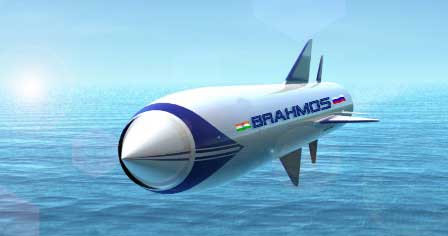
BrahMos Cruise Missile Project Sets The Gold Standard For Russian-Indian Joint Defence Projects

There has been a lot of talk recently about growing competition on India’s arms market, which is crucial for Russia. In Soviet times, Russia supplied some 75-80 per cent of the weapons for India’s Army, Air Force and Navy but now, as India matures financially, it is opting increasingly for more expensive western armaments. Back in the 1980s, German and French supplies brought India submarines and Mirage 2000 fighters and, in 1990, Israel broke in, making India one of its biggest sales markets, along with the US. Finally, the last ten years have seen a significant boost to Indian-US military and technical ties, with US’s sales of military transport and antisubmarine aircraft nearing $10 billion.  

In this situation, the best way for Russia to retain its position in India is to revise the trade paradigm of military and technical cooperation, shifting the focus to joint projects based on risk-sharing partnership, whereby the parties invest jointly in creation, production and promotion of products. Today, Russia and India have two joint defence projects, including the BrahMos programme for designing, producing and marketing supersonic stealth cruise missiles, and a project for building the MTA multirole medium transport aircraft. During Russian President Medvedev’s visit to India in December 2010, a contract was also signed to design India’s version of the Fifth Generation Fighter Aircraft (FGFA), which potentially means yet another joint undertaking. 

While the МТА programme has not yet shown any impressive progress, the BrahMos project can be seen as the ‘gold standard’ for joint military manufacturing programmes, effectively combining such factors as commercial profit for Russian and Indian partners, a tangible improvement in the combat ability of the Indian Army, Navy and Air Force, and development of new technologies, which is particularly important for India. Perhaps the project’s most valuable result is the accumulated experience of resolving difficult legislative, organisational and financial problems. In the future, this experience will be used for new joint programmes, including for the FGFA project.

What makes this programme so unique is that India is, in fact, buying one of its first standardised weapons systems that can be deployed by all three armed services - the Army, the Navy and the Air Force. 

The Indian Navy was the first customer for the BrahMos missile, which can be carried by a wide range of naval platforms, including most existing and future surface ships. The first ships to be equipped with BrahMos were Project 61ME (Kashin-Mod class) destroyers. Two of them, the Ranvir and the Ranvijay, will also be fitted with 8-missile vertical launch systems. Other ships that will carry BrahMos include three Project 15A (Kolkata class) destroyers, which are currently under construction in India, the future Project 15B destroyers, future Project 17A frigates, and three Project 11356M (Talwar class Batch 2) frigates now being built for India at the Yantar Shipyards in Kaliningrad. The future Talwar class Batch 3 frigates will also be equipped with the new missile, irrespective of where they are built, be it Russia or India.
In addition to surface ships, the Indian Navy plans to deploy BrahMos on submarines and, possibly, on land-based patrol aircraft. The suitable airborne carriers include the Russian Il-38SD ASW aircraft and, in a few years' time, the Boeing P-8I Poseidon ASW, which India has already ordered from the United States. It seems that the Indian Navy wants to make BrahMos its core weapon. The new missile’s long range (up to 280 km), high speed and powerful warhead will give Indian fighters not just a military advantage but absolute dominance over Pakistan’s ship groups, also creating a significant deterrent to China’s fast-growing navy.  

Another major customer is India’s land forces, which are buying BrahMos missiles in the mobile land-based configuration. These will be used not only against ships but also as high-precision weapons against land targets, such as command posts and key military, public and economic infrastructure facilities (the Block II LACM version). The Indian Army ordered 134 mobile anti-ship land-based BrahMos Block I missiles in 2006-2009 and another 240 land-attack BrahMos Block II in 2010, to a total of about 3 billion US dollars. 

Finally, the Indian Air Force is awaiting completion of research and development for an air-launched version of BrahMos, to be deployed primarily on Su-30 MKI fighters, with first deliveries expected in 2012. The Indian Air Force also plans to buy the BrahMos Block II version, which is designed to engage land targets. Currently, the Sukhoi Design Bureau is carrying out research and development to deploy the air-launched version of the missile on the Su-30 MKI. This will apparently become the focus for modernising the Su-30 MKI under the Super 30 programme. Indeed, the aircraft was designed in the early 1990s and is not due for an upgrade: an active phased array radar will be installed, along with BrahMos missiles.

All this is also of interest to Russian customers. Currently, BrahMos missiles and their Russian analogue, the Yakhont, are arguably the most powerful non-nuclear anti-ship weapons deployed in Russia and India and the Su-30 MKI is the only suitable carrier. The Russian Air Force plans, therefore, to order 28 Su-30 SM fighters, which will be technically similar to the Indian version, the only difference being that the Israeli and some French systems will be replaced by Russian ones. Russia’s Navy is also considering the possibility of buying 12 such aircraft for its own purposes.

In this respect, acquisition of BrahMos missiles would come in very handy. And it is not about Russian-made Yakhont missiles, but about BrahMos. From a military and technical perspective, this would mean acquisition by the Russian armed forces of the hugely effective Su-30 SM-BrahMos system, which would revolutionise the alliance of forces, for example, in the Black Sea region. And politically, it would underline the joint nature of the project. The Indians are extremely concerned about any symbols of their industrial and technological progress and acquisition by Russia of Indian products would be very much appreciated in a country that pays billions of dollars for Russian weapons every year. 

Strange as it might seem, the success of the BrahMos programme has boosted Russia’s chances of promoting its air and naval platforms on the Indian market. Normally, is the opposite would be the case: export of platforms opens up opportunities for missile supplies to be deployed on these platforms. But with BrahMos, it is the missiles that have become the driving force. So the Rubin Design Bureau is creating a special version of Russia’s new Project 677 (Аmur class) submarine to carry BrahMos anti-ship missiles as its main weapon system. This raises the submarine’s chance of winning India’s tender for six submarines worth up to $10 billion.

And last but not least, the BrahMos Aerospace joint venture has become a vehicle for further Russian-Indian projects, on an even larger scale and with greater Indian participation. The company is known to be already working on a new hypersonic missile. The unique experience accumulated since 1998 as part of the BrahMos project has paved the way for even more ambitious goals, including new strategic ballistic and cruise missiles.

http://indrus.in/

Design Freeze For Indo-Russian Hypersonic BrahMos II Missilies


China's Next Generation Fighter Projects-g J-20,J-19 And J-16 Fighter Jets


CAC didn't get all the projects. SAC also got its own 4th gen. Navy's 4th gen will be a competition between the two. Eventhough SAC has more experience with J-15, CAC will be looking to take their pie.

Both design institutes have their proposals (for navy's 4th gen), but competition hasn't start yet. SAC's convention design has more advantage in this area, since it requires little modification. CAC's design require significan altercation. Navy has requirement for stealth and supercruise, as well as supersonic manoevurability. One more thing, navy's 4th gen will be a heavy fighter.


Decent and objective article. J-20's paylod is quite good compared to its size. It's roughly about the size of T-50 and F-22, smaller than Su-27. Competition for avionics is basically done. If it enters service in about 6 or 7 years, its avionics will be roughly on par with F-35 today. And the dimension of its radar will be the largest among all 4th gen (including F-22, F-35 and T-50).

SAC's avionics will be slightly inferior to CAC's. CAC's avionics were chosen from a competitive process. In terms of payload, SAC's design has more flexibility.

2007's competition was between canard design of CAC and tri-wing design of SAC. It is different from current conventional layout project ongoing at SAC at the moment.
Competition for J-20's sub-systems is already over. We're waiting to intergrate and test them on 03 and 04 prototypes.
When completed, we estimate J-20 will have better avionics than current F-22. Among the 4S requirement, two will likely exceed it. Of course, F-22 will still be better in terms of stealth.

J-20's design philosophy is to meet stealth requirement, while emphasizing on manovurability and supercruise, similar to Mr. Song's (designer of J-10) article.

Even if our turbofan engines are on the same level as Americans, we're still likely to use canards in our design.
WS-15 engine will be equipped with 3D TVC. Russians will do the same thing with their engines. Only Americans will use 2D TVC. Each has its pros and cons, depending on what's more suitable for the user, so don't expect F-22 style nozzle on J-20.

CAC and SAC's projects will both be produced, and used in conjunction. All 4th gen are part of our future air combat network.

Originally, SAC did not plan to install TVC on their project, but now the plan has changed.
Don't expect J-20 to carry anti-ship missiles. It's both impossible and unneccessary. J-20's sole focus is air superiority, carrying 6 medium range and 2 short range air-to-air missiles.

Iran Unveils Shalamche Surface To Air Missile

Tehran: Iran on Sunday unveiled a new domestically manufactured surface-to-air missile, the Mehr news agency reported.

Defence Minister Ahmad Vahidi said the Shalamche missile, with a maximum speed of Mach 3 (around 3,670 km per hour)), can be used in electronic warfare.

Iran unveils surface-to-air missile
The missile is equipped with sophisticated radar signal processing technology and an advanced launcher, the minister said.

Iran unveils surface-to-air missile
The range of the missile, which is 40 km at present, will increase in the future. 

www.mehrnews.com

MRCA Jet Deal Could Be Split: Ex-NSA told US

Although US firms lost out on India's mega fighter deal, former national security adviser M K Narayanan had told US diplomats that the $10 billion buy could be split into two contracts and that he would ask Prime Minister Manmohan Singh to keep both price and quality in mind.

The US aircraft were finally knocked on technical grounds, but higher pricing of fighters like the F-18 series put them at a disadvantage with regard to European rivals and discussion on the deal came up before Singh's Washington visit in 2009. According to WikiLeaks, a US cable from New Delhi spoke of undersecretary Bill Burns meeting with Narayanan to preview the visit during which Narayanan expressed personal interest in "counterterrorism deliverables" and suggested the Indian government may ultimately split the tender.

Narayanan also assured Burns of progress on civil nuclear cooperation ahead of the visit, including the imminent public announcement of reactor park sites for US firms and requested lifting of restrictions on high technology trade and expanded space cooperation.

In an indication of the clout he enjoyed in the PMO, Narayanan offered his personal assistance in brokering inter-ministerial approval of the counterterrorism deliverable, the proposed Law Enforcement and Security Cooperation Initiative.

In the one-on-one meeting, Narayanan suggested that the fighter tender may be split between two recipients, and that he would recommend that PM Singh take into consideration "both price and quality".

India had no "confrontation" with the US on outer space, and nothing stood in the way of further cooperation and this could fill the void left by the completion of the civil nuclear cooperation agreement. 

The Times OF India

China's Mysterious VTOL J-18 Red Eagle Stealth Fighter Jet

Recently, China's VTOL aircraft J-18 become the focus of attention. Phoenix's military observation program focused on 31 August resolve the J-18. Some people think that J-20 high-profile appearance for the J-18 to do a cover, is said J-18 is better than J-20.

The West is disturbed not only the Chinese aircraft market potential, China's J-10 fighter and other advanced technology is that they keep a close eye target. United States, "Defense News" published a news that according to reliable military intelligence revealed that China's new 4.5 generation heavy fighter J-18 (Chinese name "Red Eagle") was officially put at the Shenyang Aircraft long.

Main parameters of the J-18


J-18 China's fourth-generation air superiority fighter. With forward-swept wing design agency, China's fourth air superiority fighter. Can be a successful maiden flight over the U.S. F-22, F-35. Service time is expected around 2015.

(1), J-18 "Red Eagle" parameter:

Wingspan: 15.2 m

Length: 22.4 m

Height: 4.94 m

Total weight: 47 tons

Empty weight: 20.5 tons

Maximum payload: 12.5 tons

Maximum speed: 3100 km / h

Maximum range: 8500 one thousand meters

(2), F-22 "Raptor" parameter:

Wingspan: 13.56 m

Length: 18.92 m

Height: 5 m

Total weight: 36 tons

Empty weight: 13.6 tons

Maximum payload :6-7 t

Maximum speed: 2335 km / h

Maximum range: 4830 one thousand meters

Significance of J -18 offline

Fighter with a lot of advanced technology, complete winning contemporary Western main fighters (3 to 4 generations), the 21st century will be China's air force one mid-battle equipment. United States, "Defense News" also reported that the aircraft has a super-stealth characteristics, and installation of a laser active phased array radar, built-in weapons bay and two large thrust-vectoring engines. "Defense News" emphasized that the U.S. is also an advanced F-22 fighters that do not possess the characteristics. "
  J-18 fighter prototype off the assembly line level indicates that China has fully reached the world advanced level, type of strategic intercontinental aircraft in the lead. In the United States tried to interfere in the Taiwan issue, the more voice and initiative.

As China has been outside of this advanced fighter strictly confidential, so the Western media only from other aircraft performance on China speculation. ITAR reports, when Russian Defense Minister Sergei Ivanov said China, Russia will consider the sale of Su-34 fighters to China, and does not rule out China's participation in the development of fifth generation fighter. Russia made the above statement, in addition to political relations between the two countries, but may also be because the Chinese aircraft manufacturing level has been a major breakthrough, even in some of the leading world level.

U.S. response

Fisher Heritage Foundation in the United States to the US-China Economic and Security Review Commission's report said the middle of China, Shenyang Aircraft Factory production of the J -18 fighter for the U.S. military and homeland security pose a serious threat to the United States must increase the funding and scientific research, the 5th generation fighter in 2009 fielded forces, continue to maintain China's strategic advantage. United States, "Defense News" reports, the U.S. Defense Department will hold an emergency meeting to study the adjustment of the U.S. in Okinawa, Korea, mainland Japan and other Asian bases of military deployment, and is likely to increase in Asia and Taiwan region F-22, F-35's number, in response to "Red Eagle" threat.

Russia's "Global Affairs" magazine also comments that: "We have every reason to believe that China will not like the aircraft manufacturing industry in the 1950s as a replica of a Soviet factory, but go more their own special way of new business, and sincerely hope J -18 successful test flight. " 

George Kennan (the U.S. military commentator): The recent disclosure of U.S. satellite photos, a secret military base in Inner Mongolia, China has a new aircraft in flight frequency tired of it! What? It is the secret of successful test flight of China's current "China's first vertical takeoff and landing fighter aircraft", following the service after the J-20 J-18.

We are here for some of the relevant information is still to us through the past to avoid some of China's "enlightened person" message. However, very little. China to take strict measures a large scale, security agencies and supervision of staff, a large presence in the test site.

The Chinese people learned the past few leaks. They do not allow those technicians to go home, communication. Even cell phones will be checked. Also not allowed to use camera phones as well as all digital cameras.

Now the top of the upper part of its plant, the application of a heavy thickness of lead, zinc laid outside the reflective material. In addition, the device uses the early development of the practice of the Mao era, systematic design is terminated into a group design.

The project includes 13 project teams. Each team can only be responsible for 1-2 projects.

To see his face in fact, unless you can put all the engineering and technical personnel, designers brought together. The overall project designer, designers. So far no detailed information is not available to the outside world.

Open a number of sheets on the network of J-18 took off picture, a picture of them clearly see the front wing, although the picture is fuzzy, blurry photos to forge such, it is very difficult. But can be sure, the U.S. F35
J-18 is a clone of the letter. J -18 fighter aircraft is a VTOL aircraft, it can be said is China's first such aircraft.

Russia, the Chinese military has taken a more mature and direct the design of supersonic cruise aircraft has an excellent ability to do battle with today's performance vehicles have a clear advantage can not be compared.

Although China has repeatedly hidden his whereabouts. However, we still know his through satellite photos on the physical state of the ground there. Test has been going on several times

US ‘CYBERCOM’ May Trigger A New Cyber Warfare: Chinese analysts

The US’ announcement to set up a Cyber Command (CYBERCOM), which is aimed at gaining military supremacy in cyber space, might trigger a new Cyber Warfare Race, Chinese strategic analysts have warned.

“It has already had the lead in conventional military and nuclear forces. Now it is expanding this advantage to be the leading force in new fields, such as electromagnetic space and outer space,” state-run China Daily quoted Peng Guangqian, a Beijing-based strategist, as saying.

US Secretary of Defence Robert Gates, recently, announced the establishment of the world’s first comprehensive, multi-service military cyber operation, called CYBERCOM, which could provide US forces a lead in new emerging strategic fields like space and outer space.

The announcement came only a few days after President Barack Obama laid out his National Security Strategy, stressing for the first time in such a document the importance of cyber security as one of the core national security interests, he said.

Meng Xiangqing, a professor with the National Defence University said there is a very thin line between a defencive and an offencive act when it comes to cyber space.

“CYBERCOM ranks high in the US military, reporting directly to the US Strategic Command, and the US is the most advanced state in cyber technology. This absolute advantage may trigger a new type of arms race,” Meng said.

Despite the US insisting CYBERCOM is mainly defencive, Meng said it “has raised a new challenge for China, and that is how to guard our national cyber security.”

States other than the US have already been planning mechanisms to guard national cyber security, including the UK, France, Russia, South Korea and Israel, which already has a military cyber force.

Song Xiaojun, a Beijing-based military strategist, said even if other countries join in the cyber arms race, they are not capable of competing with the US since it possesses the core technologies of the Internet and of all 13 Internet root servers in the world, 10 are in the US, including the only one main root server.

The newspaper also reported the comments of US Deputy Defence Secretary William J Lynn III that the potential enemy that CYBERCOM will fight has not yet been clearly identified.

“I think we need to be prepared for the unexpected. In fact, over the past several years we have experienced damaging penetrations,” Lynn had said apparently referring alleged attempts by Chinese hackers to break into sensitive defence sites. 


http://www.china-defense-mashup.com/
Related Posts Plugin for WordPress, Blogger...
Web Analytics