
Showing posts with label Fighter Aircraft. Show all posts
Showing posts with label Fighter Aircraft. Show all posts
Tuesday
Russia Ready To Sell Su-35 Fighter Jets To China

Russia's state-run arms exporter Rosoboronexport said on Tuesday it was ready to hold talks with China on the delivery of advanced Su-35 fighter aircraft to the Chinese air force.
"We are ready to work with our Chinese partners to this end [Su-35 deliveries]," Deputy General Director of Rosoboronexport Alexander Mikheyev said at the Airshow China 2010, which is being held on November 16-21 in Zhuhai.
The Su-35 Flanker-E, powered by two 117S engines with thrust vectoring, combines high maneuverability and the capability to effectively engage several air targets simultaneously using both guided and unguided missiles and weapon systems.
Russia's Sukhoi aircraft maker earlier said it planned to start deliveries of the new aircraft, billed as "4++ generation using fifth-generation technology," to foreign clients in 2011 and produce Su-35s over a period of 10 years up to 2020.
"We are ready to work with our Chinese partners to this end [Su-35 deliveries]," Deputy General Director of Rosoboronexport Alexander Mikheyev said at the Airshow China 2010, which is being held on November 16-21 in Zhuhai.
The Su-35 Flanker-E, powered by two 117S engines with thrust vectoring, combines high maneuverability and the capability to effectively engage several air targets simultaneously using both guided and unguided missiles and weapon systems.
Russia's Sukhoi aircraft maker earlier said it planned to start deliveries of the new aircraft, billed as "4++ generation using fifth-generation technology," to foreign clients in 2011 and produce Su-35s over a period of 10 years up to 2020.

China International Aviation & Aerospace Exhibition (Airshow China) is the only international aerospace trade show in China that is endorsed by the Chinese central government. The biannual arms exhibition has been held in Zhuhai since 1996.

China Developing Chengdu J-10 Next Variant

Chengdu Aerospace’s most famous product, the J-10 fighter aircraft, made its inaugural appearance at Zhuhai’s Air Show China in 2008, offering one of the most remarkable flight displays of the event. In the intervening two years, the program has made notable progress.
The J-10’s evolution mirrors that of another famous single-engine fighter aircraft, the Lockheed Martin F-16 in more than one respect.
The J-10’s evolution mirrors that of another famous single-engine fighter aircraft, the Lockheed Martin F-16 in more than one respect.

One of the F-16’s major developmental milestones was the introduction of a second, alternate engine, the F110-GE-100, which at the time produced 6,000 lbs more thrust than the F-100-PW-100/220 that was the aircraft’s original power plant. In the same vein, Chinese industry has been hard at work to complete testing and development of the Liming Aeroengine Manufacturing Corporation (LMAC) WS-10A engine.
According to Chinese news reports, the WS-10A has been flying on board prototype aircraft of the J-10’s next block-series development, which has been designated as J-10B. The WS-10A will replace the Salyut AL-31FN engine, which was the aircraft’s original power plant.
Included as part of the J-10B’s configuration is an entirely new design for the engine inlet, which has changed from the rectangular configuration developed for the AL-31FN to an oval-shaped inlet. This again parallels the F-16’s development in which a “big mouth” inlet was developed for the aircraft to provide an increase in air flow for the enhanced thrust of the GE F110 engine.
In the modern day, however, what makes the major difference in combat aircraft performance is the capability of the on-board electronic systems. Chinese industry officials told Aviation Weel that a new line of products is in development to replace some of the major pod container systems in use now on the J-10 and other aircraft.
Most notable here is the CETC KG300G electronic warfare pod, which will be redesigned in a new variant that expands the frequency bandwidths it can cover. Also in development is a new-generation active electronically scanned array (AESA) radar that would replace the aircraft’s current mechanically-steered array. “AESA radars are a major improvement for any fighter aircraft,” said one Chinese designer, “in that it provides a significant increase in reliability and radar performance.”
In the modern day, however, what makes the major difference in combat aircraft performance is the capability of the on-board electronic systems. Chinese industry officials told Aviation Weel that a new line of products is in development to replace some of the major pod container systems in use now on the J-10 and other aircraft.
Most notable here is the CETC KG300G electronic warfare pod, which will be redesigned in a new variant that expands the frequency bandwidths it can cover. Also in development is a new-generation active electronically scanned array (AESA) radar that would replace the aircraft’s current mechanically-steered array. “AESA radars are a major improvement for any fighter aircraft,” said one Chinese designer, “in that it provides a significant increase in reliability and radar performance.”
Monday
Brazil's Military Future Multi-Billion-Dollar Jet Fighter Deal

Instead Lula is leaving the decision to his successor, President-elect Dilma Rousseff, who takes office Jan. 1, Lula told official television station TV Brasil.
The United States, France and Sweden are in the race to win a contract that includes an option to buy another 100 jets from the successful supplier over the coming decades.
Sweden's King Carl XVI Gustaf weighed in to support of SAAB's Grippen fighter, French President Nicholas Sarkozy openly canvassed for Dassault's Rafale and White House support behind Boeing's F-18 fighter was widely reported in Brazil.
Lula indicated he favored buying Rafale as France offered the best technology transfer deal and expressed concern the U.S. Congress might block or restrict any Boeing deal. Grippen won support from Brazil's military strategists because of its lower cost. Swedish lobbyists also took mileage out of Queen Silvia's Latin American connection as the offspring of a German father and Brazilian mother.
High-powered lobbyists from the rivals have frequently beaten the path of the capital, Brasilia, but have failed to glean any useful information on which way Brazil would go next year.
"It's a very big debt, it's a long-term debt for Brazil," Lula said in comments cited by Agencia Brazil and MercoPress during the television appearance.
"I could sign off on it and do a deal with France but I'm not going to do that," Lula said. Critics of Rafale say the jet fighter has never been sold outside France and Dassault hopes to use a sale to kick-start a global marketing campaign. Dassault has its eyes on India and Kuwait among potential customers for Rafale.
Lula said the final decision would rest with Brazil's National Defense Council, which includes Cabinet ministers, armed forces commanders and the president.
Defense Minister Nelson Jobim, who has been closely involved with the negotiations with Dassault, Saab NG and the Boeing Co., will continue his job in the new administration.
Jobim echoed Lula's view that the French offer was the best because of its technology transfer package but senior Brazilian air force commanders favored the F-18 despite a smaller technology transfer package. Supporters for cost-effective Grippen also weighed in but analysts said the Swedish bid still faced more critics within Brazil's decision-making machinery.
The choice of a jet fighter for a fast modernizing air force ties in with Rousseff's plans to create a new civil aviation secretariat that will incorporate departments under defense. The plan is part of an urgent strategy to reverse the poor reputation of Brazilian aviation infrastructure ahead of the 2014 World Cup and 2016 Olympics.
Officials say the new government is keen to begin an extensive overhaul of Brazilian aviation -- both civil and military -- and promote more sophisticated manufacturing of aircraft for expanding national networks and for export.
READ MORE
South Korea receives three F-15K Slam Eagles

The aircraft left the Boeing St. Louis facility on Aug. 16 and made stops in Palmdale, Calif., Hickam Air Force Base, Hawaii, and Anderson Air Force Base, Guam, before arriving in Korea.
"We are pleased to receive the latest three F-15K Slam Eagles, F-15K 51, 52 and 53, from Boeing," said Lt. Col. Tae Uk Kim, Commander of the 110th Squadron, 11th Fighter Wing, ROKAF. "The F-15K is one of our most important assets in defense of the peninsula. We are satisfied with the continued on-schedule, quality deliveries of our F-15K Slam Eagles from Boeing."
Boeing delivered the first six of 21 F-15Ks it is producing under the Next Fighter II contract in 2010, followed by two in April and two more in May. The remaining eight aircraft will be delivered through April 2012.
"Boeing has a demonstrated record of on-time, on-cost deliveries to the ROKAF," said Roger Besancenez, Boeing F-15 Program vice president. "We're proud of that record, and equally proud of Boeing's relationship with Korean industry, which includes major work sharing and partnerships on both commercial and defense products. Our long-term cooperative relationship enables Boeing and Korean industry to ensure the ROKAF continues to fly a superior multi-role aircraft in defense of Korea."
Six of the new F-15K Slam Eagles are scheduled to participate in an advanced aerial combat training exercise at Nellis Air Force Base, Nev., in late January.
The F-15K is an advanced variant of the combat-proven F-15E. Equipped with the latest technological upgrades, it is extremely capable, survivable and maintainable. The aircraft's service life is planned through 2040, with technology insertions and upgrades throughout its life cycle. Boeing completed delivery of 40 Next Fighter I F-15K aircraft to the ROKAF in October 2008 Published by HT Syndication with permission from Daily Pak Banker
Pakistan Keen To Purchase F-16 Fleet From Norway

At a meeting held between Minister for Defence, Ch. Ahmed Mukhtar, and the visiting Norwegian Defence Minister, Ms. Grete Faremo an agreement was reached to further bilateral ties with the aim to promote peace and stability in the region.
Ch. Ahmed Mukhtar said both countries needed to enhance collaboration in the field of defence production and proposed to undertake joint ventures especially in ship building and sea boats manufacturing sectors.
The Minister also conveyed that Pakistan was keen to purchase F-16 aircraft fleet which was reportedly being replaced by Norway with F-35 Lightning-II Joint Strike Fighter (JSF).
Sunday
Shenyang J-16 TO Make First Flight In 2011

A new stealthy 4.5+ generation heavy fighter, developed from the J-11B, is supposed to make its first flight in 2011.
It's named the J-16 by unconfirmed sources.
It's named the J-16 by unconfirmed sources.


It was rumored in November 2010 that SAC is developing a 4.5th generation heavy multi-role fighter.With a conventional layout based on J-11B. First flight was rumored to be within 2011.
Chinese J-911C Fighter Aircraft Project

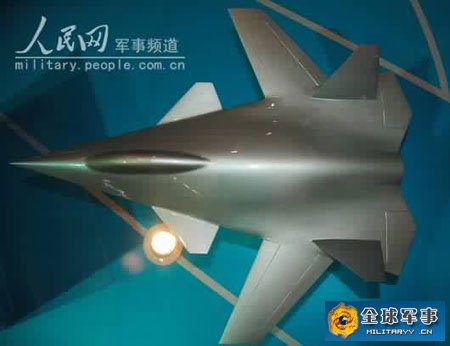

Source: Chinese Thunder Dragon Magazine:
J-911C "game birds are" as the author designed a multi-mission land-based fighter aircraft program. It uses standard full-motion no tail x aerodynamic winglets. Head and the edge of the smooth transition back gradually blended wing body with no apparent boundaries of the fuselage and wings.
The wing-body fusion of the body designed to maximize interior space and increase the availability of additional lift. Inlet tanks at the task in front of the nose. This structure can reduce the size of the task of enormous tanks of resistance, but also conducive to high angle of attack when the intake efficiency. Cabin set in a high position, increasing the driver's field of view in favor. Nozzle with all the vector control.
"Game bird person" within the main wing with a motorized fan to provide vertical thrust, and its diameter of 7.6 meters. Vertical takeoff and landing, and maneuvering for the increase in lift. The following are tasks the fan compartment, the large space with 15-21 cubic meters of volume.
Task is two sides of the engine compartment, outside the main landing gear in the engine, placed in the inlet to move away next. Landing gear installed in the inlet before the lower, back away. In the tail with short-range defense / attack systems for close combat and intercept incoming missiles. The following will be introduced one by one "game bird who" of the performance characteristics.
The wing-body fusion of the body designed to maximize interior space and increase the availability of additional lift. Inlet tanks at the task in front of the nose. This structure can reduce the size of the task of enormous tanks of resistance, but also conducive to high angle of attack when the intake efficiency. Cabin set in a high position, increasing the driver's field of view in favor. Nozzle with all the vector control.
"Game bird person" within the main wing with a motorized fan to provide vertical thrust, and its diameter of 7.6 meters. Vertical takeoff and landing, and maneuvering for the increase in lift. The following are tasks the fan compartment, the large space with 15-21 cubic meters of volume.
Task is two sides of the engine compartment, outside the main landing gear in the engine, placed in the inlet to move away next. Landing gear installed in the inlet before the lower, back away. In the tail with short-range defense / attack systems for close combat and intercept incoming missiles. The following will be introduced one by one "game bird who" of the performance characteristics.
First, the ultra-mobility.
full motion full pneumatic small wing lifting surface is divided into the wing, stabilizer and control surfaces. Fighter aircraft, including large aircraft, the horizontal tail design for the whole move is to increase the torque control aircraft pitch. The greater the control surfaces that control the aircraft the greater the torque, the aircraft's response is the sooner. So speaking from a position in a certain range of the aircraft control surface center of gravity farther away from the larger control torque.
According to this theory, we separate the role of wing press, the lifting surface design in a separate location near the aircraft center of gravity, and then integrated control surface and the stabilizer, placed as far away from the aircraft center of gravity. A pair of front wing and rear wing arrangement of a pair of the four corners of the aircraft center of gravity, the formation of x-type. This is a small wing X full motion. Obviously, in terms of pitch or roll to do action, X layout can provide maximum torque.
Nozzle to vector the whole "game birds are" full-vector nozzle to provide thrust towards the control of six directions, up and down in about two deflection of four under the deflector, the maximum angle of about 30 each vector degrees, 90 degrees up and down 95 degrees. 95 degrees down to hover in order to control the attitude and design. Do up and down the convergence deflector four movements, for adaptation to the size of the engine jet flow. In connection with the engine nozzle with lead shot into the upper and lower air intake, the role of two points.
First, the argument can be used as nozzle fired into the air intake to increase traffic and reduce the wake temperature.
Followed by four in the upper and lower guide plate is turned off completely when the jet engine exhaust will be forced from the opening two long bar in front of discharge syncline, which is the inverse function.
Second, the low visibility.
Shape only by stealth and radar absorbing coating is not enough to reduce the RCS value. Here the low visibility of the "see" I think the meaning should be found, and should not simply refer to the radar visibility. It should be a factor in all the general term that can be detected.
Non-wing control "game bird who" in the cruise can be more effective in reducing RCS values, because then only the use of vector control aircraft attitude can nozzle. This will avoid the control surface in the shape of turning invisible when the damage.
The concept of stealth combat aircraft, although some can be invisible but only a stealth cruise, in its state into the fighting will temporarily lose stealth. The "game birds were" due to the inlet wall and the wing root to install a plasma generator, it's control surfaces in the large angle rotation can still maintain a low RCS state.
The concept of stealth attack stealth aircraft missiles in combat must be extended so that the guide head lock EVA target, open the bomb bay would increase the RCS values. The "game bird who" have a "cabin launch" capability. Missiles can be projected out from the inlet until the missiles start flying after the collapse EVA Wings re-ignition. In fact, conventional pylons have similar institutions, but it is sent down force, but also smaller forces.
Infrared Infrared Stealth aircraft is the largest local characteristics of the end of nozzle, but it is not impossible infrared feature. "Game bird who" in addition to reduced use of ejector wake temperature, because of its inlet attached to the inner wall of the plasma layer will be inhaled by the engine outer bypass discharge. Plasma is also for reducing the visibility of certain infrared effect. At this point the plasma discharge by the nozzle wake wrapped in the peripheral temperature, without reducing the efficiency of the case of jet greatly reduced infrared signature.
Third, the vertical mobility.
"Game bird who" installed in the main wing through the vertical fan and the downward deflection of nozzle for its ability to provide vertical takeoff and landing. This makes him, in most cases the same, like a helicopter taking off and landing in the field of flat ground.
Fourth, super fighting skills.
The key to the traditional fighting, in the shortest possible time, opponents point to the head and then opened fire. "Game bird who" completely break the pattern, even if do not do the same maneuver can be done any fighting. This depends on the off-axis attack. And this off-axis attack, but also is based on its short-range laser defense / attack systems.
The concept of off-axis attack: "Scorpion" Laser short-range defense / attack system. Off-axis against the axis of the aircraft is outside the attacks. Do in the body posture changes relative to turn their weapons goals. Have this capability, the aircraft will not have the mobility of fighting ability, mobility aircraft even more powerful. In the "game bird who" of the rear fuselage with a laser short-range defense / attack system, back out the caudal is the execution platform. The system has three functions: short-range defense, short-range attacks and view aim. Caudal vertebrae can rotate 90 degrees up or down, and its execution platform does not rotate when the angle of attack is greater than after the hemisphere, so that we can do almost no dead ends.
Fifth, the task module concept.
In the implementation of different tasks, different tasks through the unit to re-mount configuration tasks module. "Game bird person," according to mission requirements, is converted to different purposes. Or focus on a variety of tasks to complete the flight.
Although the "game bird who" in the post-mounted unit can not achieve the task-specific type of combat effectiveness, but it can greatly enhance their battlefield use of the versatility and convenience. "Game bird who" of the task space can be fully opened down, ground personnel to facilitate their internal operations.
Also in the firing anti-ship missiles, because missiles are too large to open the side door, throwing missiles fired after the ignition.
Indian Tejas Multi-Role Light Combat Aircraft Gets Its Operational Clearance:IOC

India has joined the select club of countries making a fighter jet from scratch, receiving operational clearance for its first lightweight indigenous multi-role Light Combat Aircraft.
Dubbed Tejas, the new fighter was handed over to the Indian air force this week by Defense Minister A.K. Antony.
Describing the hand-over as a "historic occasion," Antony said the state-of-the-art aircraft would enhance national security and the country's aspirations of buildings it own warplane capability.
The project is said to have been conceived 27 years ago as a replacement for the air force's aging MiG-21 fleet. It was conceived and designed by the Aeronautical Development Agency of the Defense Research and Development Organization's and manufactured at the Hindustan Aeronautics Limited.
"After accomplishing a series of milestones of envelope expansion, sensor integration and weapon delivery in over 1,500 sorties, the country is poised for a major turning point with the declaration of the IOC," Antony said during the hand-over ceremony.
The Indian air force is expected to roll out as many as 140 Tejas aircraft by the end of the decade.
The test stage of the new fighter jet was started in January 2001 and it has completed 1,508 flight tests using various variations, including a two-seat trainer version.

Describing the hand-over as a "historic occasion," Antony said the state-of-the-art aircraft would enhance national security and the country's aspirations of buildings it own warplane capability.
The project is said to have been conceived 27 years ago as a replacement for the air force's aging MiG-21 fleet. It was conceived and designed by the Aeronautical Development Agency of the Defense Research and Development Organization's and manufactured at the Hindustan Aeronautics Limited.
The Indian air force is expected to roll out as many as 140 Tejas aircraft by the end of the decade.
The test stage of the new fighter jet was started in January 2001 and it has completed 1,508 flight tests using various variations, including a two-seat trainer version.

Reportedly, development of the jet suffered because of sanctions by the United States after India carried out nuclear tests in May 1998.
Bent on bolstering its defenses and becoming a regional superpower, India intends to spend up to $30 billion on its military by 2012. In recent months, also, it inducted a long-range, nuclear-tipped missile into its armed forces, unveiling a defense spending budget spiked by 24 percent since last year.
The moves have Pakistan fretting, with leading officials billing India's drive a "massive militarization."
Defense ministry officials say that the first batch of aircraft with international operational clearance will be handed over to the country's air force will be handed over by March, while two more will be inducted by the end of the year.
"These will be part of the consignment of 20 aircraft that the Indian air force has ordered," The Hindu daily reported. "The rest will be delivered progressives until 2013."
Air Chief Marshal P.V. Naik said final operation clearance would require two years.
To earn the final clearance, experts say the aircraft will have to go through Mach-speed and weapon systems checks by the government's Defense Research and Development Organization.
The aircraft is powered by the U.S.-built GE 404 engine. The government defense organization short-listed General Electric last year against Eurojet in the competition to build a higher thrust engine to power the next lightweight version, billed the Mark-2.
India has joined the select club of countries making a fighter jet from scratch, receiving operational clearance for its first lightweight indigenous multi-role Light Combat Aircraft.
Describing the hand-over as a "historic occasion," Antony said the state-of-the-art aircraft would enhance national security and the country's aspirations of buildings it own warplane capability.
The project is said to have been conceived 27 years ago as a replacement for the air force's aging MiG-21 fleet. It was conceived and designed by the Aeronautical Development Agency of the Defense Research and Development Organization's and manufactured at the Hindustan Aeronautics Limited.
"After accomplishing a series of milestones of envelope expansion, sensor integration and weapon delivery in over 1,500 sorties, the country is poised for a major turning point with the declaration of the IOC," Antony said during the hand-over ceremony.
The Indian air force is expected to roll out as many as 140 Tejas aircraft by the end of the decade.
The test stage of the new fighter jet was started in January 2001 and it has completed 1,508 flight tests using various variations, including a two-seat trainer version.
Reportedly, development of the jet suffered because of sanctions by the United States after India carried out nuclear tests in May 1998.
Bent on bolstering its defenses and becoming a regional superpower, India intends to spend up to $30 billion on its military by 2012. In recent months, also, it inducted a long-range, nuclear-tipped missile into its armed forces, unveiling a defense spending budget spiked by 24 percent since last year.
The moves have Pakistan fretting, with leading officials billing India's drive a "massive militarization."
Defense ministry officials say that the first batch of aircraft with international operational clearance will be handed over to the country's air force will be handed over by March, while two more will be inducted by the end of the year.
"These will be part of the consignment of 20 aircraft that the Indian air force has ordered," The Hindu daily reported. "The rest will be delivered progressives until 2013."
Air Chief Marshal P.V. Naik said final operation clearance would require two years.
To earn the final clearance, experts say the aircraft will have to go through Mach-speed and weapon systems checks by the government's Defense Research and Development Organization.
The aircraft is powered by the U.S.-built GE 404 engine. The government defense organization short-listed General Electric last year against Eurojet in the competition to build a higher thrust engine to power the next lightweight version, billed the Mark-2.
IAF To Get 42 More HAL-Produced Su-30MKIs Fighters


Hindustan Aeronautics expects the Indian air force to order an additional 42 locally produced Sukhoi Su-30MKIs.
The possible order would come on top of the 180 Su-30MKIs HAL is already producing for the air force, says company chairman Ashok Nayak.

About 105 aircraft from the 180-strong order have been delivered so far, Nayak says. In addition, in mid-2010, India ordered 40 Su-30MKIs as flyaways from Russia's Sukhoi.
Saturday
PLAAF Drill's With J-7 Jets


European Consortium Offering Its Science Fiction-Evoking Helmet to the Indian Air Force (IAF)

The European Eurofighter Typhoon consortium is offering its almost science fiction-evoking helmet to the Indian Air Force (IAF) as part of its bid to win the 126 Medium Multi Role Combat Aircraft (MMRCA) tender, according to company sources. The helmet can enable a pilot to lock-on target and shoot by voice command, merely after looking at the target.
Company sources confirmed to StratPost that the Eurofighter Typhoon Helmet Mounted Symbology System, developed by BAE Systems and released last July, was part of its offering to the IAF. BAE Systems had issued a press release on the helmet earlier this month, calling it something out of Star Wars, in a reference to its seemingly filmy capabilities, where it said the helmet ‘lets the pilot see through the body of the aircraft’.
“Using the new helmet system, the pilot can now look at multiple targets, lock-on to them, and then, by voice-command, prioritize them. It’s a lightning-fast system to let the pilot look, lock-on, and fire,” said BAE Systems of the system, which also brings to mind the thought-controlled weapons system onboard the fictional MiG-31 in the Clint Eastwood-starring Firefox.
Company sources confirmed to StratPost that the Eurofighter Typhoon Helmet Mounted Symbology System, developed by BAE Systems and released last July, was part of its offering to the IAF. BAE Systems had issued a press release on the helmet earlier this month, calling it something out of Star Wars, in a reference to its seemingly filmy capabilities, where it said the helmet ‘lets the pilot see through the body of the aircraft’.
“Using the new helmet system, the pilot can now look at multiple targets, lock-on to them, and then, by voice-command, prioritize them. It’s a lightning-fast system to let the pilot look, lock-on, and fire,” said BAE Systems of the system, which also brings to mind the thought-controlled weapons system onboard the fictional MiG-31 in the Clint Eastwood-starring Firefox.

The helmet has a number of fixed sensors, which move in relation to the sensors on the aircraft as the pilot moves his head, ‘ensuring the aircraft knows exactly where and what he is looking at’. Apparently, the pilot can zero-in on targets even if they’re out of line of sight or nowhere in the range of the aircraft vector.
Pilots of British Royal Air Force (RAF) Eurofighter Typhoons are expected to be become the first users of this helmet sometime this year.
Friday
JF-17 Fighter Aircraft Program Continues to Grow


“This is the project that can become a true flagship of the historic cooperation and strengthen the relationship between our two countries”. These were the words of Gilani as he addressed a gathering of Chinese and Pakistani technicians during his visitation to the JF-17 manufacturing facility at the Pakistan Aeronautical Complex.
He also expressed his satisfaction and pride of the successful progress of the JF-17 program and the fact that it is constantly completing milestones. The JF-17 project is definitely one of the biggest joint project going on between Pakistan and its strategic partner – China. Both governments expect that such cooperation will strengthen their time-tested relationship. Gilani said that every Pakistani is cherishing the help which China provides to the JF-17 program and a couple of other project. PM believes this project will write another glorious chapter in the history of the cooperation between the two countries.
Gilani wasn’t the only official visiting the factory, other names there were General Khalid Shameem Wynne, Chairman Joint Chiefs of Staff Committee and Air Chief Marshal Rao Qamar Suleman, Chief of the Air Staff of the Pakistan Air Force were also visitors of the factory. They had the opportunity to witness the amazing progress which the JF=17 aircraft manufacturing program has achieved.
The JF-17 project is one of the most ambitious Pakistani programs and it has successfully complete many milestones. Thanks to this program, Pakistan can now proudly stand amongst the group of countries which manufacture modern combat aircraft.
The JF-17 is one of the most cost-effective, multi-role combat aircraft and it is specifically designed to meet the needs of the Pakistan Air Force.
The first batch is expected to be of 50 JF-17 Thunder aircraft which are to be equipped with the Chinese radar and SD-10 Beyond Visual Range Missile. Later batches are expected to be equipped with a more advanced radar.
The JF-17 military program is not the only program Pakistan-China cooperate on, other programs include F-22p Frigate and ZDK-03, which consists of Chinese AESA radar mounted on the Y-8F600 platform.


Bangladesh Is Negotiating With China To Get J-10 Fighter_Aircraft

According to the Russian military news network reported on December 1,2010, Prime Minister Sheikh Hasina of Bangladesh Army in the country before his speech at the ceremony said the government would purchase a large number of various types of weapons and equipment for the protection of its exclusive economic zone, to participate in UN peacekeeping action. China has been a major arms supplier to Bangladesh, the procurement of most of the weapons may be in the favorable financial conditions or military assistance to China within the framework of supply.
Bangladesh Prime Minister Sheikh Hasina announced that the government is drafting a large number of weapons and equipment import contract, plans to purchase modern tanks, artillery, air defense missile systems, fighter aircraft and helicopters. British " Defence Industry" magazine reported that Bangladesh had purchased 140 armored personnel carriers, have all been received and the armed forces.
Prime Minister Sheikh Hasina said the Government of Bangladesh will also increase the cost of training military personnel, while Cox's Bazar improve air base infrastructure, strengthening patrolling the waters of the Bay of Bengal, in the Mill Pool will also be set up 37 anti-aircraft regiment.
Now the leadership of Bangladesh attaches great importance to non-traditional security threats, including piracy, natural disasters and the Bay of Bengal waters, increasing competition for energy. In addition, Bangladesh and Myanmar, also, the Indian territorial disputes, mainly some countries with large oil and gas resources in the territorial ownership of the continental shelf. Myanmar, Bangladesh, 2008 6 vessels accused, including two warships, violating the exclusive economic zone of Bangladesh. Both sides insisted that a large number of oil and gas resources with the Bay of Bengal as its territory in the disputed region.
Bangladesh military budget after only 15 billion dollars. Baoji, Shaanxi Province in recent years in China, Special Purpose Vehicle Co., Ltd. has been providing credit to Bangladesh within the framework of 4x4 wheeled armored personnel carriers supply ZFB05 type. The end of 2009 the company announced that it is with Bangladesh to negotiate a new batch of equipment supply. Chengdu Aircraft Industrial Group in 2007 to Bangladesh supply 12 F-7BG the type, 4 FT-7BG two-seater fighter, currently being negotiated and Bangladesh Air Force JF-17 and the more modern F -10 fighter supply. According to unofficial information, Bangladesh Navy from China have been two, "Jiang Wei" class Ⅱ type (053H3) frigates.
Bangladesh had purchased three British naval vessels on active service, including a hydrological observation vessels and two offshore patrol vessels. In addition, the Bangladesh Navy and the Italian Augusta Westland has signed a two AW-109 light twin helicopter purchase agreement.
Bangladesh Prime Minister Sheikh Hasina announced that the government is drafting a large number of weapons and equipment import contract, plans to purchase modern tanks, artillery, air defense missile systems, fighter aircraft and helicopters. British " Defence Industry" magazine reported that Bangladesh had purchased 140 armored personnel carriers, have all been received and the armed forces.
Prime Minister Sheikh Hasina said the Government of Bangladesh will also increase the cost of training military personnel, while Cox's Bazar improve air base infrastructure, strengthening patrolling the waters of the Bay of Bengal, in the Mill Pool will also be set up 37 anti-aircraft regiment.
Now the leadership of Bangladesh attaches great importance to non-traditional security threats, including piracy, natural disasters and the Bay of Bengal waters, increasing competition for energy. In addition, Bangladesh and Myanmar, also, the Indian territorial disputes, mainly some countries with large oil and gas resources in the territorial ownership of the continental shelf. Myanmar, Bangladesh, 2008 6 vessels accused, including two warships, violating the exclusive economic zone of Bangladesh. Both sides insisted that a large number of oil and gas resources with the Bay of Bengal as its territory in the disputed region.
Bangladesh military budget after only 15 billion dollars. Baoji, Shaanxi Province in recent years in China, Special Purpose Vehicle Co., Ltd. has been providing credit to Bangladesh within the framework of 4x4 wheeled armored personnel carriers supply ZFB05 type. The end of 2009 the company announced that it is with Bangladesh to negotiate a new batch of equipment supply. Chengdu Aircraft Industrial Group in 2007 to Bangladesh supply 12 F-7BG the type, 4 FT-7BG two-seater fighter, currently being negotiated and Bangladesh Air Force JF-17 and the more modern F -10 fighter supply. According to unofficial information, Bangladesh Navy from China have been two, "Jiang Wei" class Ⅱ type (053H3) frigates.
Bangladesh had purchased three British naval vessels on active service, including a hydrological observation vessels and two offshore patrol vessels. In addition, the Bangladesh Navy and the Italian Augusta Westland has signed a two AW-109 light twin helicopter purchase agreement.
JF-17 Fighter Aircraft Program Continues to Grow

“This is the project that can become a true flagship of the historic cooperation and strengthen the relationship between our two countries”. These were the words of Gilani as he addressed a gathering of Chinese and Pakistani technicians during his visitation to the JF-17 manufacturing facility at the Pakistan Aeronautical Complex.
He also expressed his satisfaction and pride of the successful progress of the JF-17 program and the fact that it is constantly completing milestones. The JF-17 project is definitely one of the biggest joint project going on between Pakistan and its strategic partner – China. Both governments expect that such cooperation will strengthen their time-tested relationship. Gilani said that every Pakistani is cherishing the help which China provides to the JF-17 program and a couple of other project. PM believes this project will write another glorious chapter in the history of the cooperation between the two countries.
Gilani wasn’t the only official visiting the factory, other names there were General Khalid Shameem Wynne, Chairman Joint Chiefs of Staff Committee and Air Chief Marshal Rao Qamar Suleman, Chief of the Air Staff of the Pakistan Air Force were also visitors of the factory. They had the opportunity to witness the amazing progress which the JF=17 aircraft manufacturing program has achieved.
The JF-17 project is one of the most ambitious Pakistani programs and it has successfully complete many milestones. Thanks to this program, Pakistan can now proudly stand amongst the group of countries which manufacture modern combat aircraft.
The JF-17 is one of the most cost-effective, multi-role combat aircraft and it is specifically designed to meet the needs of the Pakistan Air Force.
The first batch is expected to be of 50 JF-17 Thunder aircraft which are to be equipped with the Chinese radar and SD-10 Beyond Visual Range Missile. Later batches are expected to be equipped with a more advanced radar.
The JF-17 military program is not the only program Pakistan-China cooperate on, other programs include F-22p Frigate and ZDK-03, which consists of Chinese AESA radar mounted on the Y-8F600 platform.
Thursday
Turkish Aerospace Industries (TAI) To Develop New Indigenous Modernization Kits and Mission Computers For F-16s

Turkey’s military aircraft giant Turkish Aerospace Industries (TAI) is set to develop new indigenous modernization kits and mission computers.
Upgrades will be applicable to all the F-16 Block 40 fighters of the Peace Onyx III and Block 50 fighters of the Peace Onyx IV programs, as well as the Block 30s that were acquired earlier. TAI plans to market the upgrades for export to other countries.
Previous news about TAI and Aselsan’s joint attempts to produce indigenous mission computers have been clarified by TAI insiders. Latest reports indicate that the companies have finalized their technical consultations with the MOD and industrial suppliers as of the end of January and the project has been given green light in order to equip Turkey’s vast fleet of F-16s with newly developed indigenous sensors and weapons such as Aselpod navigation and targeting system, various missiles and high-precision munitions produced and/or currently under development in Turkey.
Project aims to upgrade all of Turkish Air Force (TurAF) F-16s with indigenous mission computers, software and avionics in order to pave the way for the installation of an Aselsan-developed AESA radar by 2015.
Hardware for the avionics upgrade will be exclusively manufactured by Aselsan, while TAI will tackle the development of millions of lines of highly specialized software. Upgrades will be performed by the same team that performed C-130 modernization and software team mostly consists of experienced engineers who have worked on the Anka UAV development program. Upgraded aircraft will look somewhat similar to existing Peace Onyx exterior configurations, except with specific EW-E/O sensor additions and pylons capable of launching ’Made in Turkey’ guided munitions.

Integration of indigenous systems on aircraft of Lockheed Martin origin is known to be a difficult undertaking. TAI and Aselsan’s take on the project and F-16s “nationalization” at the Block 50 level is expected to offer Turkey a wide window of export and ‘transfer of technology’ (TOT) opportunities thanks to the F-16s widespread popularity around the world.
Turkey will be able to sell these countries comprehensive modernization packages like the CCIP, individual sensors and weapon systems like targeting pods and missiles, as well as “nationalization” opportunities with direct TOT.
Turkey’s ‘special status’ with the F-16 comes from its existing place among the world’s top three users of the aircraft, previous manufacturing and export experience with the Falcon (to Egypt), as well as Turkey’s long-standing partnership and commitment in the F-35 JSF program.
Some Turkish defence analysts suggest that Turkey’s newfound ability to nationalize the F-16 is simply a means for compensating the country for not being given F-35 source codes, despite the longstanding NATO member’s commitment for an initial batch of over 100 F-35s.

India’s MRCA To Be Known By Month End


DRDO Official Sees Good Export Potential For Tejas Fighter Jets

DRDO said there could be a good export market for Tejas, the country's first indigenously built supersonic fighter aircraft, if the Centre okayed it.
Speaking to The Hindu recently, he said the DRDO had already received enquiries for Tejas from various countries.
The plane was given Initial Operating Clearance (IOC) only recently by Defence Minister A. K. Antony. The Light Combat Aircraft (LCA) was the star attraction at the recently conducted Aero India air show in Bangalore, in which 45 countries took part.
Speaking to The Hindu recently, he said the DRDO had already received enquiries for Tejas from various countries.
The plane was given Initial Operating Clearance (IOC) only recently by Defence Minister A. K. Antony. The Light Combat Aircraft (LCA) was the star attraction at the recently conducted Aero India air show in Bangalore, in which 45 countries took part.
Saying India was among very few countries in the world capable of producing fighter planes, Mr. Selvamurthy said that third world countries, developing countries and even some of the developed countries were markets for Tejas.
Since the production cost, research and development cost of the Tejas was relatively low compared to the other fighter aircraft, India could sell the Tejas at a lower price.
Since the production models were doing extremely well, there wouldn't be any problem in obtaining Final Operating Clearance (FCA) for the fighter aircraft, he said.
In line with the requirements of the Indian Air Force, the process of fine tuning Tejas, including flight envelope, flight manoeuvrability, payload integration and other issues have been taken up.
The fighter plane is expected to get the Final Operating Clearance in the first quarter of 2012, the official said.
Production completed
Mr. Selvamurthy said out of 40 Tejas aircraft ordered by the Indian Air Force (IAF), the Hindustan Aeronautical Limited (HAL) had already completed production of 10. It had already been figured in the inventory of IAF. Another 20 aircraft would be completed after the Final Operating Clearance is given.
It is expected that an order might be received for a large number of aircraft in 2012. HAL had also geared up its capacity building facilities, including assembly line and others.
It planned to increase the capacity to increase the number of aircrafts built in a year to meet the growing demand.
The distinguished scientist said the cost of aircraft, which stood around Rs.130 crore, was expected to come down once the HAL started large-scale production of Tejas.
The country had been placed in comfortable position as far as Tejas was concerned as it was not depended upon anybody for lifecycle support, maintenance cost and others because of the indigenous technology.
Subscribe to:
Posts (Atom)


